



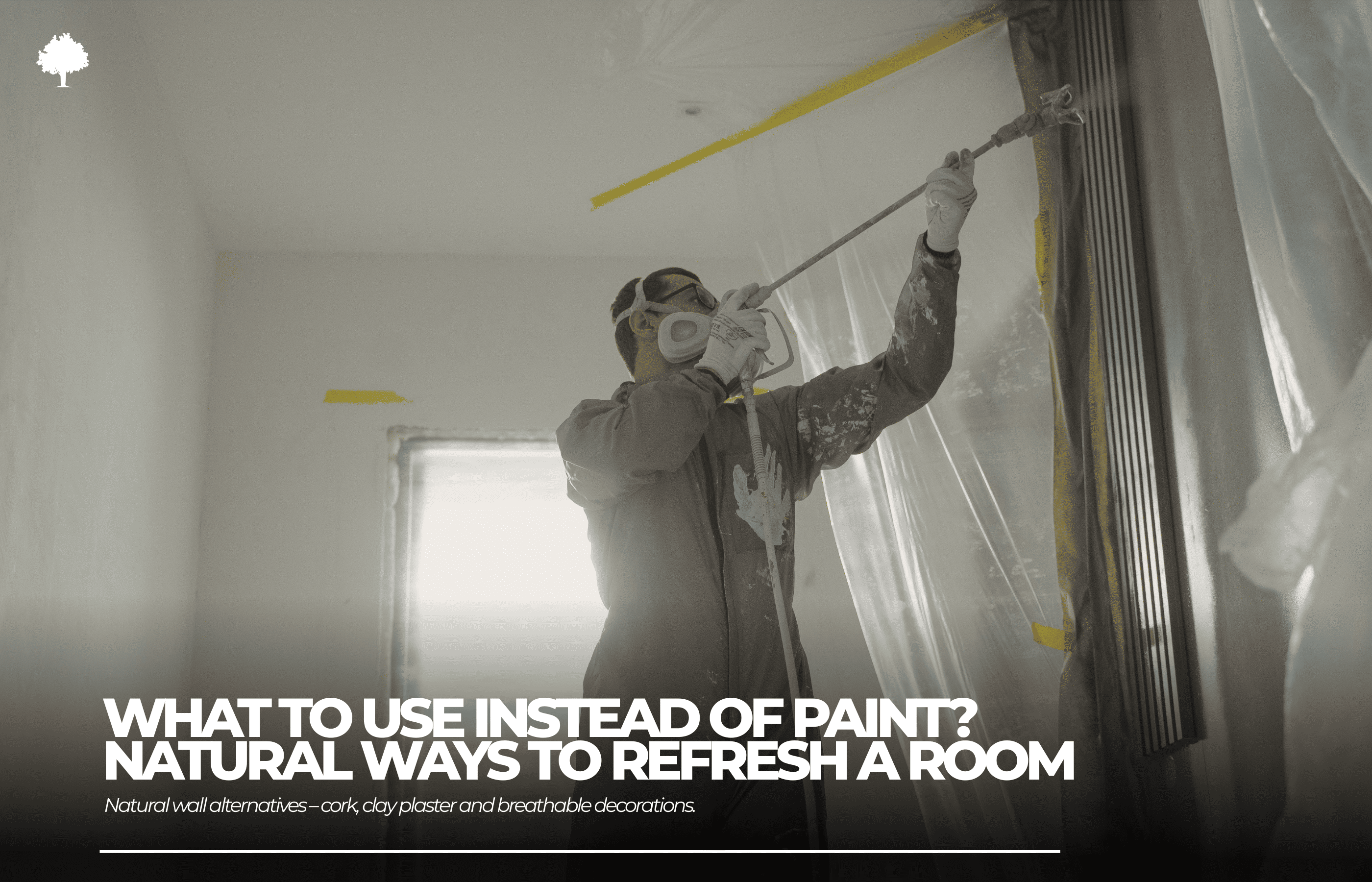
Designing a child’s room goes far beyond aesthetics alone. When choosing finishing materials, more and more parents are paying attention not only to how they look, but also to their impact on children’s health and the environment. Traditional paints, although available in countless colour options, often contain volatile organic compounds (VOCs) that can negatively affect indoor air quality – and consequently, a child’s wellbeing. In response to these concerns, interest in alternative, natural ways of refreshing interiors is steadily growing.
In this article, we explore how classic paint can be replaced in a child’s room without sacrificing style or functionality.
Table of Contents
1. Introduction
2. Why is it worth avoiding paint?
3. Alternatives: How to transform a room without using paint
4. Decorative natural cork – warmth, nature, and functionality
5. Refreshing without repainting – transformation through accessories
6. Summary
7. FAQ
Why is it worth avoiding paint?
Although paint remains one of the most common finishing materials, an increasing number of conscious parents are choosing to move away from it in favour of more natural solutions. Traditional paints, especially solvent-based ones, may contain harmful substances such as formaldehyde, toluene, or benzene. Even products labelled as “eco-friendly” or “child-safe” are not always free from volatile organic compounds (VOCs), which can cause headaches, allergies, skin irritation, or respiratory issues.
Alternatives: How to transform a room without using paint
Renovating a child’s room doesn’t have to mean opening tins of paint. There are many alternatives that allow you to create a unique, healthy, and visually appealing interior without compromising a child’s wellbeing. What’s more, many of these solutions offer easy personalisation and can be adapted as children grow and their tastes evolve.
Wall coverings made from natural fibres
Wall coverings made from linen, jute, seagrass, or rice paper are an excellent alternative to classic vinyl finishes. Natural fibres do not emit toxins and introduce pleasant texture and an organic feel into the interior. It’s best to choose products free from artificial dyes and synthetic adhesives, ideally with recognised eco-certifications.
Wooden panels and plywood
Wood brings warmth, texture, and natural character that synthetic materials simply can’t replicate. Walls or selected sections can be finished with solid wood panels or formaldehyde-free plywood. Wooden slats are also an interesting option, adding a modern rhythm to the space while serving both decorative and acoustic purposes.
Textile wall solutions
Instead of painting or wallpapering, consider decorating walls with textiles. Cotton or linen fabrics hung on dedicated rails create a cosy atmosphere, improve sound absorption, and are easy to remove and wash. This solution is ideal for parents who value flexibility and the ability to refresh the room quickly.
Decorative natural cork – warmth, nature, and functionality
What is cork and where does it come from?
Natural cork is a plant-based material obtained from the bark of the cork oak (Quercus suber), which grows mainly in the Mediterranean region – particularly in Portugal, Spain, and Italy. The harvesting process is fully sustainable: trees are not cut down, but instead carefully stripped of bark every 9–12 years, allowing them to continue growing and regenerating. Thanks to this, natural cork is considered one of the most eco-friendly materials available in interior design.
Cork properties: hypoallergenic, sound-absorbing, thermal
What makes natural cork truly special are its unique physical properties. Its cellular structure – made up of microscopic air-filled cells – means the material is:
-
Hypoallergenic – it does not attract dust or support the growth of mould or mites, making it ideal for children’s rooms, especially for allergy sufferers.
-
Sound-absorbing – it reduces noise, which is particularly important in shared bedrooms or apartment living.
-
Thermally insulating – it helps retain heat and improves indoor thermal comfort, contributing to lower energy use.
In addition, natural cork is flexible, lightweight, abrasion-resistant, and naturally antistatic.
Ideas for use: walls, panels, boards, colourful panels
In a child’s room, natural cork can serve both decorative and practical purposes. Here are a few inspiring applications:
-
Wall panels – full walls or selected sections covered in cork create a warm, inviting atmosphere.
-
Cork boards – in a modern form, they go far beyond framed rectangles, offering playful geometric shapes ready for creative use.
-
Colourful cork panels – available in a wide range of colours and shapes, they allow for creative wall compositions that combine aesthetics with functionality and can evolve as the child grows.
Aesthetics: shades and textures – natural design for children
Modern technologies make it possible to produce natural cork in a variety of shades – from classic beiges and browns to contemporary greys, pastels, and deeper tones. Textures can range from smooth to rustic, or resemble stone, wood, or fabric.
Importantly, natural cork fits beautifully into children’s interiors – it feels friendly, soft to the touch, and creates a sense of warmth and cosiness. It pairs effortlessly with other natural materials such as wood, linen, cotton, or wool. As a result, the child’s room gains not only in functionality, but also in character and natural charm.
Refreshing without repainting – transformation through accessories
Refreshing a child’s room doesn’t require a full renovation or the use of paints and chemicals. Often, it’s the details – carefully chosen and thoughtfully arranged – that have the greatest impact. Introducing new accessories, updating textiles, or making small furniture changes can completely transform the space without dust, odours, or costly construction work.
Cushions, rugs, baskets, and shelves – small changes, big impact
Natural textiles such as organic cotton, linen, or wool are not only visually appealing, but also safe and gentle on a child’s skin. Pastel cushions, handwoven rugs, linen curtains, or felt organisers can instantly add freshness and lightness. By changing them seasonally or thematically, the room can easily adapt to a child’s age and interests.
Such solutions not only refresh the interior, but also help teach children a sense of aesthetics, order, and awareness of their surroundings.
Summary
Naturally refreshing a child’s room does not require compromises or sacrificing aesthetics. On the contrary – a conscious approach to designing children’s spaces allows you to create interiors that are harmonious, healthy, and truly special. Avoiding paint, choosing natural materials, and creatively using accessories or upcycling are not only practical, but also responsible decisions that pay off in the long run.
High-quality natural cork, clay plasters, linen textiles, or wooden accents help create an environment that supports development, play, and rest. These are solutions that meet the needs of families seeking original, eco-friendly, yet durable and functional alternatives to traditional interior finishing methods.
FAQ – frequently asked questions
1. Are natural materials really safer for children than paint?
Yes. Paints may contain synthetic substances that affect air quality. In contrast, natural materials such as natural cork, linen, or clay are fully biodegradable and do not emit toxins, providing a safe and healthy environment – especially important for young children and allergy sufferers.
2. Are cork or natural-material decorations available in different colours?
Yes. Modern technologies allow natural cork to be coloured in a wide range of shades – from classic earthy tones to soft pastels and vibrant colours. This makes it easy to match children’s room décor without compromising on natural character.
3. Does a natural makeover require specialist skills?
Some materials, such as clay plasters, are best applied with professional help, but many solutions – including cork panels, linen textiles, or creative upcycling – can be implemented independently. Many companies offer ready-made installation kits and clear instructions, making the process more accessible.
4. Are these solutions easy to keep clean?
Yes. Natural cork is antistatic, so it doesn’t attract dust. Natural fabrics can be washed, and wood can be maintained using natural oils. Most of the proposed solutions are designed with family use in mind, where both aesthetics and practicality matter.


