
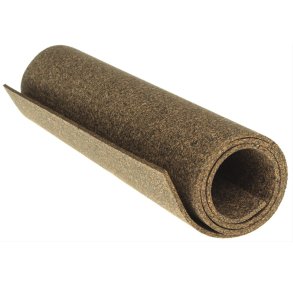
Rubber cork rolls for seals and gaskets

Looking for a dependable material to produce oversized gaskets? Conventional sealing materials often struggle to provide a precise fit, leading to premature wear, leaks, and unexpected maintenance costs. A rubber cork roll offers a practical solution for manufacturing custom large-format gaskets that adapt to irregular surfaces, deliver reliable sealing performance, and retain their durability even in demanding operating conditions. By helping prevent leaks, it can also reduce downtime and keep equipment running efficiently.


Find the answers below!

WHAT ARE RUBBER CORK ROLLS USED FOR?

Rubber cork rolls are commonly selected for the production of large-format gaskets and custom-fabricated sealing components. Supplied in roll form, the material can be processed efficiently, allowing manufacturers to maximize material usage while reducing scrap and production waste.

Available in multiple thickness options, rubber cork can be tailored to meet specific engineering requirements, performance expectations, and operating environments.

WHAT INDUSTRIES USE RUBBER CORK GASKETS?

Rubber cork is widely used across industrial and commercial applications where dependable sealing performance, flexibility, and resistance to environmental conditions are critical. The material performs well when exposed to moisture, UV radiation, vibration, and a variety of chemical substances.

One of its primary applications is the manufacture of industrial gaskets cut directly from roll stock. These gaskets are frequently used in automotive systems, construction projects, gas installations, and mechanical equipment requiring reliable sealing and vibration control.

Additional applications include engineered wood products, orthopedic footwear components, electrical equipment, transformer systems, energy infrastructure, and vibration-isolation solutions used in demanding industrial environments.

WHY IS NATURAL CORK COMBINED WITH RUBBER?

Combining natural cork with rubber creates a material that offers both sealing efficiency and durability. Cork contributes compressibility and surface conformity, allowing the gasket to adapt to uneven contact areas, while rubber enhances strength, resilience, and long-term performance.

The result is a material capable of handling continuous compression, mechanical stress, and vibration without losing its sealing properties. This balance of characteristics explains why rubber cork has remained a trusted gasket material for decades.


For manufacturers producing large custom gaskets, rubber cork rolls provide a practical and cost-effective solution. The material adapts well to a variety of surfaces, helping create dependable seals that remain effective over extended periods of use. Its versatility makes it suitable for both high-volume production and specialized custom projects.


Compared with many alternative gasket materials, rubber cork delivers an excellent combination of flexibility, service life, and value. By blending the unique benefits of natural cork and synthetic rubber, it offers a reliable sealing material capable of meeting the requirements of numerous industries.


Ease of fabrication is another major advantage. Roll material can be converted into oversized gaskets and complex custom shapes with minimal waste. A broad selection of thicknesses also allows engineers and manufacturers to fine-tune sealing performance for specific applications while maintaining durability and operational reliability.