



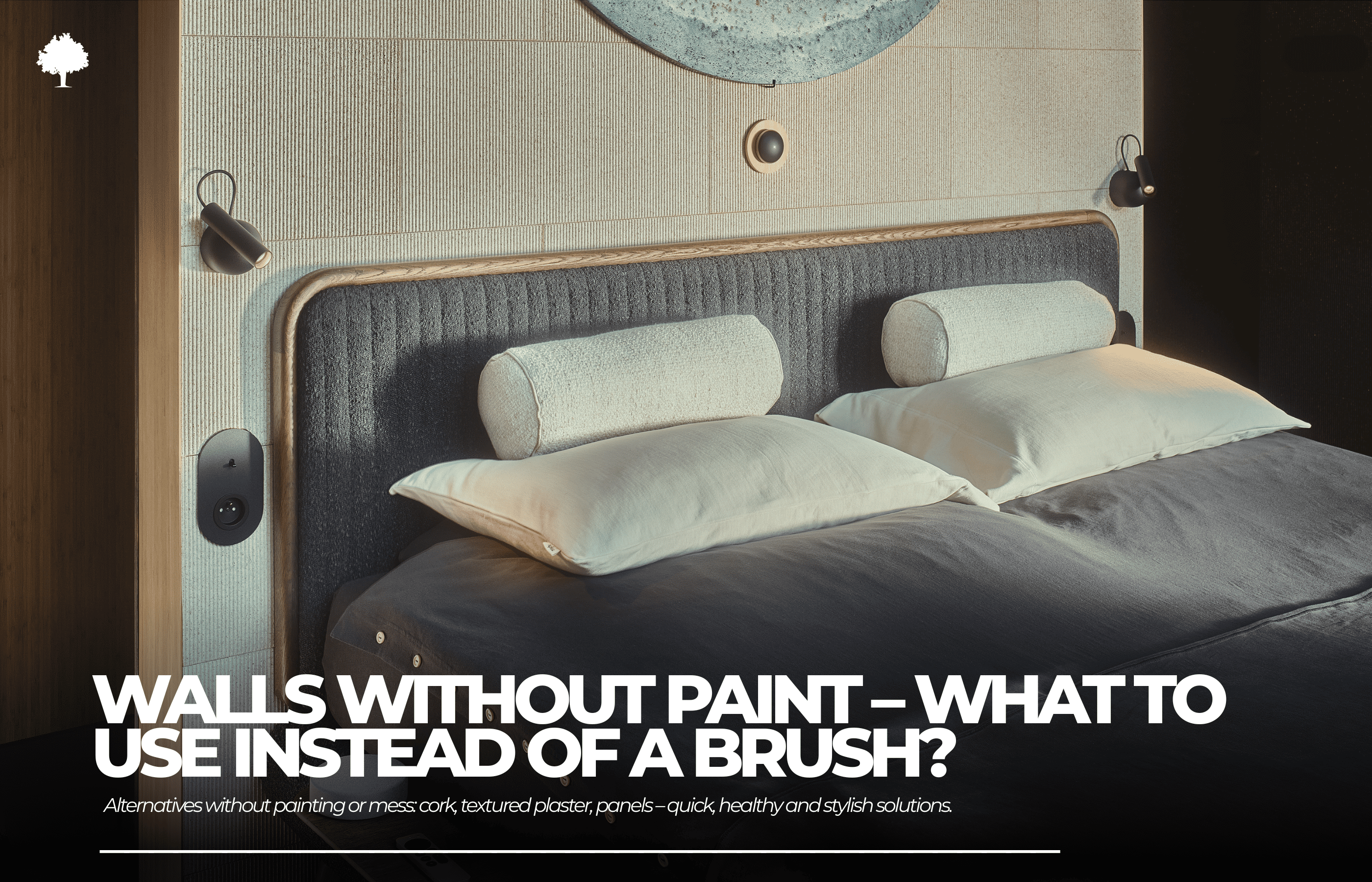
Time is a luxury, and in a world shaped by people who value a high quality of life and everyday comfort, every design decision needs to balance aesthetics with efficiency. Painting walls can be time-consuming, inconvenient, and doesn’t always deliver the desired result. Fortunately, there are modern, design-led ways to refresh interiors quickly – without rollers, paint fumes, or taking rooms out of use for several days.
In this guide, we take a closer look at alternatives that not only shorten the transformation process, but often introduce an entirely new level of quality to interior spaces.
Table of Contents
1. Introduction
2. Why traditional painting is no longer worth it
3. What people don’t tell you about paint
4. What instead of paint? Faster and better options
5. How to approach it
6. Summary
7. FAQ
Why traditional painting is no longer worth it
For years, paint was considered the default way to refresh walls. Today, with growing expectations around comfort and finishing quality, more and more people are noticing its limitations. First and foremost – painting is a time-intensive process. Even when hiring professionals, it requires protecting the space, moving furniture, waiting for each coat to dry, and often making corrections. These are days taken out of everyday life, and not everyone is willing or able to sacrifice that time.
Painting also means mess – sanding dust, splashes, and an unpleasant smell that lingers in the air for days. For those who value order and smooth daily routines, this level of disruption to the home environment is simply too much.
What’s more, paint durability is often misleading. Over time, walls lose their fresh look – scratches appear, paint chips, UV discolouration sets in, and even stains can occur. Even the best paint won’t escape signs of wear, especially in high-traffic areas such as hallways, staircases, or children’s rooms. The result? The renovation cycle has to be repeated, which in the long run means wasted time, energy, and money.
What people don’t tell you about paint – the hidden drawbacks of the classic solution
For decades, paint was seen as the gold standard for wall finishes, yet in practice it comes with a range of issues that are rarely talked about openly. At the purchasing and painting stage, everything seems simple: you choose a colour, hire a team (or do it yourself), and enjoy a refreshed interior. But that’s only half the story.
Over time, cracks start to appear on painted walls – especially along plasterboard joints, around door frames, or in corners. This is an inevitable result of a building’s natural movement, temperature changes, and humidity. Paint doesn’t flex with these shifts – it cracks and exposes the underlying plaster.
Staining is another often overlooked issue. In kitchens, bathrooms, or even living rooms near windows – anywhere moisture and steam reach the walls – paint quickly loses its fresh appearance. Over time, dull patches, streaks, and in the worst cases, peeling surfaces begin to appear.
It’s also rarely mentioned that every small touch-up remains visible. Spot repairs usually result in a patch of a slightly different shade – even when using the same paint. For those who value a flawless finish, this leaves only two options: repaint the entire wall or accept an aesthetic compromise.
In theory, paint is a cheap and fast solution. In practice, it often becomes a source of recurring costs and disappointment.
What instead of paint? Faster and better options
Fortunately, traditional painting is no longer the only way to achieve a visually appealing wall refresh. For those who expect immediate results without mess, a new generation of solutions has emerged – quick to install, visually striking, and often more durable than paint.
Self-adhesive panels and decorative elements are among the most revolutionary solutions of recent years. Ready to use, they require no tools or specialist skills – simply peel off the backing and apply directly to the wall. Available in a wide range of styles, from geometric 3D structures to finishes that mimic concrete, wood, or stone, they fit seamlessly into a variety of interiors.
Decorative natural cork is an option for those who value warmth and authenticity in interiors. This 100% eco-friendly material is pleasant to the touch and offers acoustic and thermal properties. Importantly, it’s also available in self-adhesive versions, allowing for DIY installation without drills, dust, or mess. Natural cork works equally well as full wall cladding or as decorative accent panels – in a home office, bedroom, or living room.
How to get started? Fast, but done right
Modern wall solutions allow you to skip the time-consuming stages of a traditional renovation, but that doesn’t mean preparation can be ignored. On the contrary – the better you take care of the basics, the more durable and satisfying the final result will be.
Rule number one: the wall must be clean. Dust, grease, remnants of old paint, or construction residue can all weaken adhesion. It’s worth wiping the surface with a damp cloth and a mild detergent, then drying it thoroughly. A clean base is the foundation of durability.
Second: smoothness matters. Self-adhesive materials are not designed for textured plaster or structural walls. They adhere best to smooth surfaces: skim coat, plasterboard, or polished concrete. If the wall is rough, lightly sanding and levelling it won’t take much time and will significantly improve the final effect.
Preparation isn’t a waste of time – it’s an investment in durability. Properly installed panels or decorative elements can last for years without the need for adjustments or replacement. What’s more, well-applied materials look clean and refined – without lifting edges, air bubbles, or misalignment.
Summary
For homeowners who don’t want to waste time on mess, paint fumes, and long renovation processes, traditional painting is increasingly losing out to modern alternatives. Self-adhesive panels offer not only fast installation, but also durability, aesthetics, and everyday comfort – without taking the home out of normal use.
FAQ
1. Do self-adhesive panels really stay in place?
Yes – provided the wall is properly prepared: clean, dry, and smooth. Modern adhesive technologies used in high-quality panels ensure long-lasting results without the need for additional fixing.
2. Can installation really be done without professional help?
Absolutely. This is one of the biggest advantages of these solutions – no specialist tools or experience are required. Manufacturers’ instructions are usually clear and straightforward, and the installation process itself is intuitive.
3. Will this work in large rooms?
Yes. Modern panels and decorative elements are available in modular formats that work perfectly for covering larger surfaces. They can be used on a single accent wall or throughout an entire room – depending on the effect you want to achieve.


