



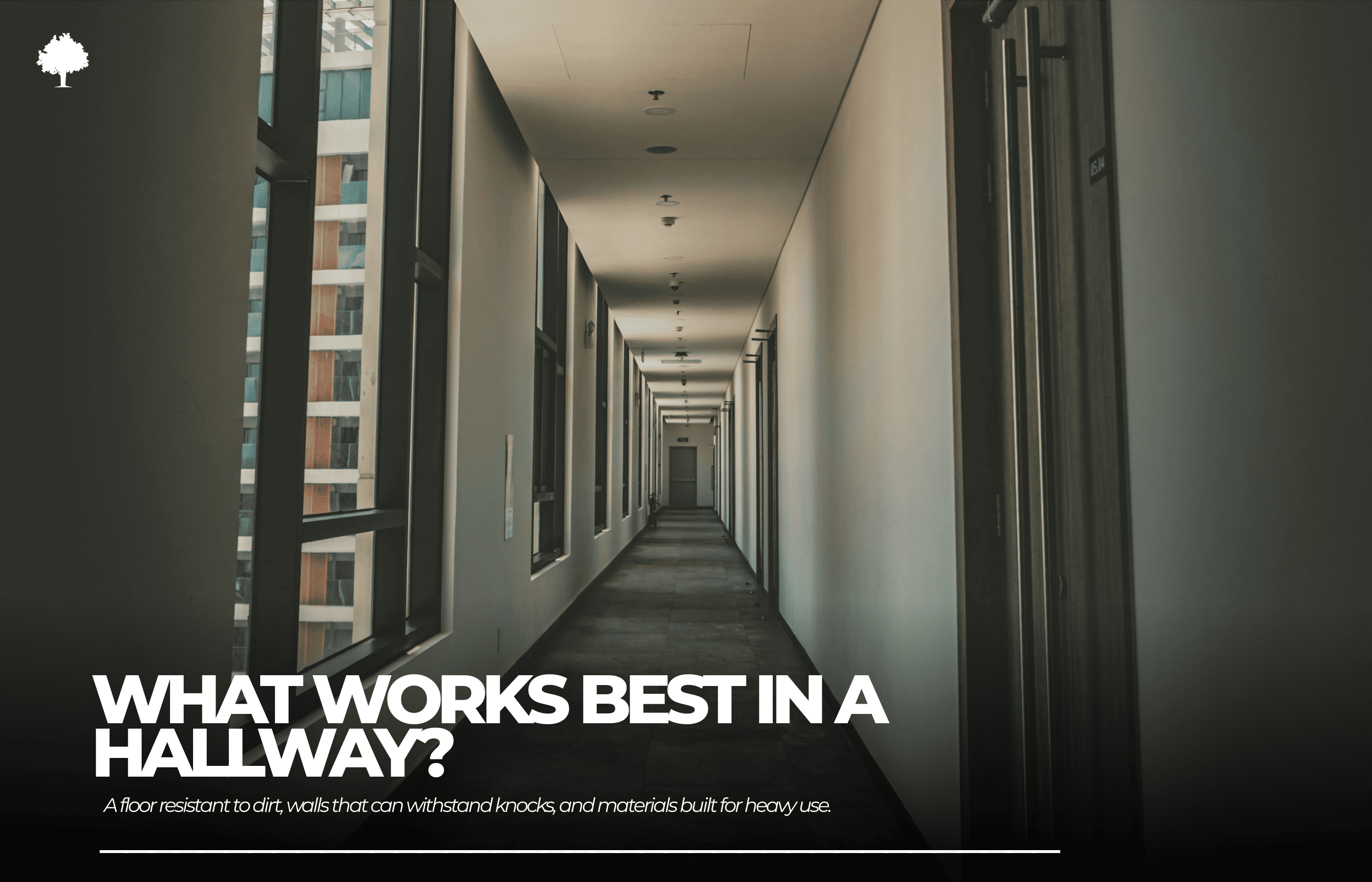
The hallway is a transitional space that is often overlooked during the interior design process. Yet this is exactly where a home welcomes its guests – and first impressions, as we all know, matter a great deal.
In 2025, we’re seeing a clear shift towards solutions that combine design with practicality. Hallway walls must meet specific requirements – resistance to dirt, ease of cleaning, and durability are just some of the key criteria. In this guide, we present current trends, proven materials, and inspirations that will help you create an elegant and functional hallway.
Table of Contents
1. Introduction
2. The hallway – an underrated hub of everyday home life
3. What features should the ideal wall material for a hallway have?
4. Top materials
5. The most common mistakes when designing hallway walls
6. Summary
7. FAQ
The hallway – an underrated hub of everyday home life
Although the hallway primarily serves a circulation function, its role in the daily lives of household members and guests is far greater than it might seem. This is where each day begins and ends – from the morning rush to evening returns home. The hallway is often the place for a final glance in the mirror before leaving, a space for quick exchanges, greetings, and farewells. In practice, it becomes a connector between different areas of life – private, shared, and representative.
The role of the hallway in a flat or house
In larger homes, hallways also serve an organisational purpose – separating functional zones, improving acoustic comfort, and allowing for better space management. In compact apartments, they are often multifunctional, acting as a wardrobe area, a mini wall gallery, or discreet storage. Regardless of size, a well-designed hallway enhances the overall aesthetic value of the interior and has a significant impact on how it is perceived.
Why wall finishes in this area really matter
Hallway walls are exposed to everyday wear and tear: accidental knocks, hand marks, scuffs from bags, suitcases, or children’s pushchairs. That’s why choosing the right materials is so important – ones that are durable, easy to maintain, and visually appealing at the same time.
What features should the ideal wall material for a hallway have?
Choosing finishing materials for a hallway requires far more attention than it might appear at first glance. This is a space particularly exposed to daily use, so it’s worth opting for solutions that combine durability, functionality, and a refined look. Below, we outline the key qualities an ideal hallway wall material should offer – in line with the expectations of even the most demanding users.
Durability
In a hallway, walls must withstand intensive use. The material should be resistant to impacts and scratches that can occur during everyday activities. Lacquered finishes, decorative panels, or specialised ceramic paints are examples of solutions designed with such conditions in mind.
Ease of cleaning
Dirt in a hallway is unavoidable, but it doesn’t have to be a problem. Materials should allow stains to be removed easily, without the need for harsh chemical cleaners.
Aesthetics
The hallway is the home’s calling card, so the visual aspect of the finish plays a crucial role. Wall materials should harmonise with the overall interior design and highlight its character. In 2025, solutions with a natural texture are especially valued – wood, natural cork, stone, structural plasters, or slatted panels. Subtle earth tones, elegant greys, and timeless white in a luxurious matte finish are also very much on trend.
Acoustic and thermal properties
Today, many people focus not only on appearance, but also on everyday comfort. Materials that absorb sound and improve thermal insulation enhance privacy and energy efficiency. Acoustic slats, felt wall panels, or natural cork are solutions that effectively improve the acoustic quality of a space.
Eco-friendliness and safety
Conscious consumers expect materials that are safe for health and the environment. Products free from harmful volatile organic compounds (VOCs), certified for quality, and made from renewable resources are no longer just a bonus – they are increasingly seen as the standard.
Top materials for hallway walls – proven solutions for 2025
When choosing wall finishes for a hallway, it’s worth considering not only aesthetics, but also functionality and durability. Here are three materials that stand out in 2025 as the most recommended solutions.
Vinyl wallpaper – durability meets design
Modern vinyl wallpaper is synonymous with elegance and practicality. Thanks to its multi-layer construction with an outer vinyl coating, it offers high resistance to dirt, moisture, and mechanical damage. It’s easy to keep clean – most stains can be removed with a damp cloth. What’s more, contemporary designs – from subtle textile textures to concrete or wood effects – make it easy to match vinyl wallpaper to almost any aesthetic, from classic to modern.
Wall panels (MDF, PVC, wood) – instant effect with added protection
Wall panels combine quick installation with immediate visual impact. Depending on the base material, they can introduce the warmth of natural wood, the modern lightness of white finishes, or the minimalist structure of matte PVC. They are highly practical – protecting walls from damage, requiring minimal maintenance, and allowing for easy replacement if needed.
Natural cork – an eco-friendly alternative with character
For those seeking solutions aligned with sustainable design principles, natural cork is close to ideal. It’s fully renewable, biodegradable, and harvested without harming trees. What’s more, it meets all the key criteria of modern wall finishes:
-
Durability: a long-lasting material.
-
Ease of cleaning: the surface allows for quick removal of dust and light stains.
-
Aesthetics: cork’s structure gives interiors a unique character and natural warmth, pairing beautifully with wood, stone, or minimalist accents.
-
Acoustic and thermal properties: cork excels at sound absorption and improves thermal comfort.
-
Eco-friendliness and safety: the absence of toxic additives and excellent compatibility with allergy sufferers make cork a responsible, modern choice.
In 2025, cork is making a comeback – not as a fleeting trend, but as a conscious choice for people who expect more from the spaces they live in.
The most common mistakes when designing hallway walls
Even the most refined interior design can be undermined by poorly considered wall finishes in key areas like the hallway. Below are three of the most common mistakes that can reduce comfort and visual appeal – and, importantly, are easy to avoid.
Overly delicate materials
A frequent mistake is treating the hallway like a bedroom and using materials with low resistance to damage or dirt. Paints without protective coatings, paper wallpapers, or decorative plasters without impregnation can quickly lose their appeal under daily use. In hallways, it’s better to invest in materials designed for intensive wear – while the initial cost may be higher, it saves time, money, and frustration in the long run.
Ignoring functionality
Design alone isn’t enough. A common pitfall is choosing finishes solely for their appearance, without considering practical aspects such as ease of cleaning, moisture resistance, or the ability to replace damaged sections. As a high-traffic space, the hallway requires thoughtful solutions – every decorative element should also offer protection and be easy to maintain.
Overlooking household needs (children, pets)
Stylish finishes are one thing – everyday life is another. Families with children or pets should be especially careful when choosing wall materials. Children often touch or lean against walls, and pets can leave fur behind. Dirt-resistant materials, matte finishes that reduce the visibility of marks, and washable surfaces respond to real-life needs – without compromising on aesthetics.
Summary
The hallway is a space whose functionality and aesthetics directly affect everyday comfort and the overall impression of an interior. In 2025, designing this area is not just about following trends, but about making informed choices that combine durability with design. Choosing the right wall materials – such as natural cork – makes it possible to create a space that stands up to daily challenges, is user-friendly, and aligns with modern ecological standards.
FAQ – most frequently asked questions about hallway wall finishes
1. Are light colours on hallway walls practical?
Yes – provided they are used on materials with high resistance to dirt, such as ceramic paints, vinyl wallpapers, or wall panels with washable coatings. Light shades visually enlarge the space and add elegance, making them a smart choice when applied thoughtfully.
2. How can the lower part of the wall be protected from damage?
Wall panels installed up to waist height, protective mouldings (such as classic panelling), high-resistance vinyl wallpapers, as well as slats or cork – all offer durable, easy-to-maintain protection.
3. Is it worth investing in natural cork?
Absolutely. It’s a material that combines durability, insulating properties, and ecological value. Safe, allergy-friendly, and highly suitable for family hallways, it only requires proper surface protection for intensive use.


