



Today, there’s no need to drill or make permanent fixtures to achieve a spectacular visual effect. Decorations can be light in weight yet artistically “strong” – drawing the eye, adding character, and organising the space. What’s more, many of them can be easily removed, rearranged, or even moved to another room.
In this article, we’ll explore a wide range of materials and ideas for wall décor that seamlessly combine aesthetics, functionality, and practicality.
Table of Contents
1. Introduction
2. Aesthetic impact without heavy materials
3. Materials ideal for lightweight décor
4. Striking ideas for lightweight decorations
5. Summary
6. FAQ
Why avoid heavy materials?
Although solid frames, metal installations, or thick shelves made of solid wood can look impressive, they’re not always the best choice for everyday use. In many situations, lightweight décor works better – both in terms of weight and form. It’s an aesthetic, functional, and far more flexible solution.
Technical aspects – structural limitations
Modern construction often relies on lightweight structures, such as plasterboard walls. While practical and quick to install, they have limited load-bearing capacity. Hanging heavy décor on them requires special anchors and reinforcement, and even then it does not guarantee durability or safety. On top of that, each drilled hole leaves a visible mark that’s difficult to cover.
Rented homes – the need for flexibility
When renting, we usually can’t make permanent changes to the walls. Many landlords don’t allow drilling, and at the end of the tenancy the flat often has to look exactly as it did on move-in day. Lightweight decorations mounted with double-sided tape, hook-and-loop fasteners, or adhesive hooks allow you to enjoy a stylish space without damaging surfaces or using tools.
Safety for household members
In rooms used by children or elderly people, decorations must above all be safe. Lightweight items, even if they fall, won’t cause harm. This is especially important in children’s rooms, above beds or desks, or in hallways. Natural, lightweight materials – such as natural cork, textiles, or thin decorative panels – are far more suitable in such spaces than glass, metal, or heavy frames.
A modern approach to interiors
Contemporary interiors embrace change and easy adaptation. Lightweight decorations allow frequent updates without effort or risk of damage. This is an ideal solution for people who enjoy seasonal changes, like experimenting with style, or simply prefer not to invest in permanent, difficult-to-move elements.
Materials ideal for lightweight décor
Choosing the right materials is key to creating décor that is not only visually appealing but also practical. For lightweight solutions, it’s best to opt for materials that offer low weight combined with durability, easy installation, and an attractive look. Two of them – fabrics and natural cork – fit these requirements perfectly.
Fabrics – softness, texture, and creative freedom
Fabric décor is a timeless staple of lightweight interior design. Its biggest advantage is the ability to add warmth and softness without visually overwhelming the space. Textiles can be hung without drilling, using rods, tapes, or hook-and-loop systems.
Popular options include:
-
boho-style macramé and woven hangings,
-
decorative ethnic fabrics or batiks as an alternative to framed art,
-
linen or cotton strips with typographic prints,
-
soft textile panels mounted with hook-and-loop fasteners.
Fabrics blend beautifully with many interior styles – rustic, Scandinavian, or modern. Thanks to their natural softness and varied textures, they create a subtle yet noticeable backdrop for the rest of the décor.
Natural cork – functionality and sustainability
Natural cork is becoming an increasingly valued material for lightweight décor. Long associated mainly with noticeboards, it is now making a comeback as a modern and versatile decorative material.
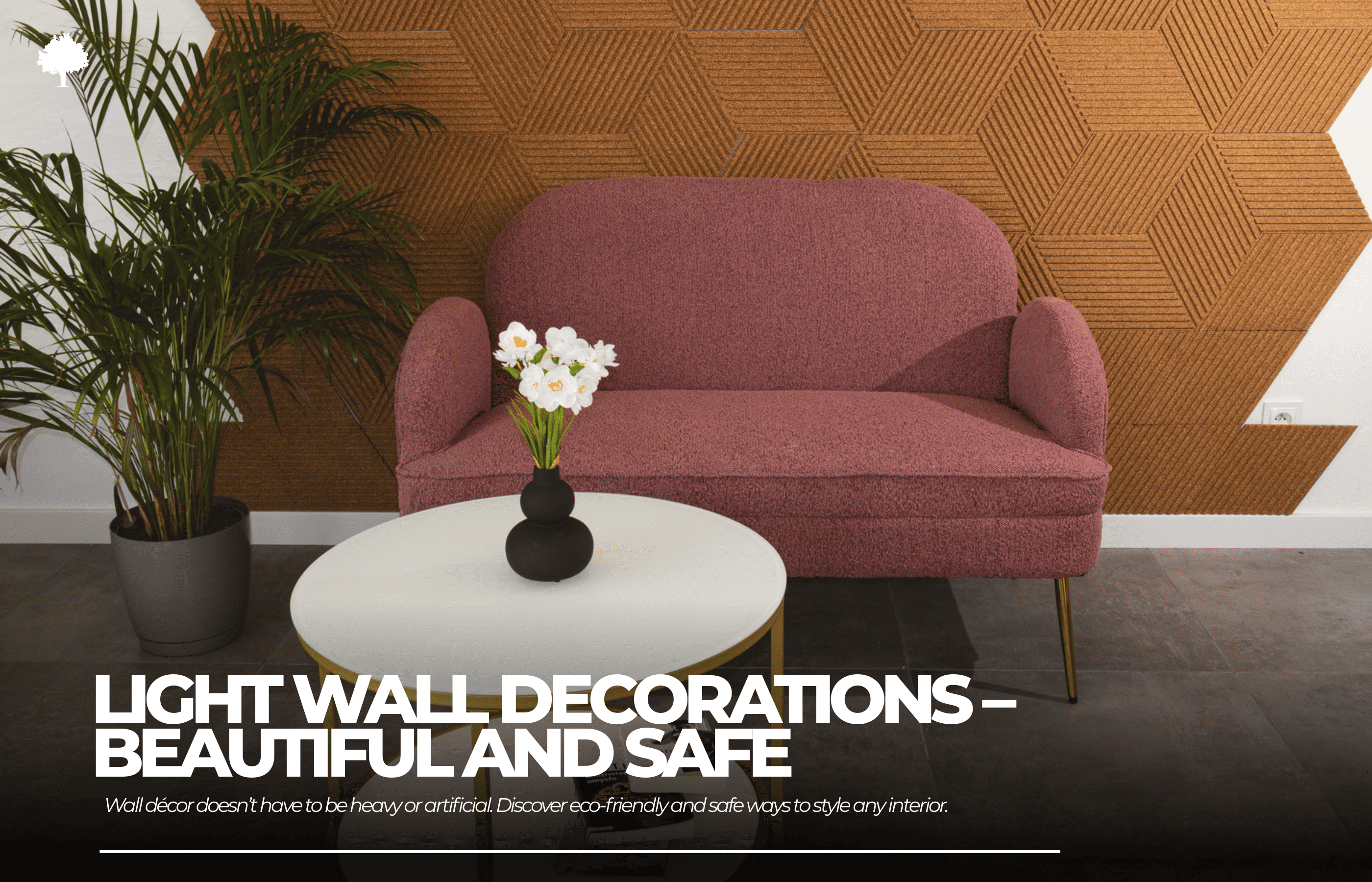
Natural cork stands out for its exceptionally low weight, making it ideal for installation on thin walls. It is flexible, adheres well to surfaces, and can be easily cut and shaped. Its natural structure absorbs sound and provides thermal insulation, enhancing indoor comfort.
Its subtle colours – from light beige to deep browns – and its distinctive, irregular pattern make natural cork suitable for nature-inspired interiors as well as minimalist spaces. Coloured cork panels are also available, making it easy to match the material to specific colour schemes.
Natural cork is used today to create:
-
lightweight wall panels – smooth, carved, or mosaic-style,
-
organisation boards for the kitchen, office, or children’s room,
-
decorative geometric inserts and abstract shapes.
It’s a material that combines aesthetics with functionality and environmental responsibility – renewable, biodegradable, and entirely natural.
Striking ideas for lightweight décor
Lightweight doesn’t mean compromising on aesthetics. On the contrary – well-designed wall décor can attract attention even more than heavy elements. The key lies in a thoughtful concept, the right choice of materials, and intentional use of space. Here are two proven ways to create a striking yet non-intrusive wall decoration.
Gallery walls without nails
A wall decorated with a composition of prints, photos, or posters can give an interior a distinct and personal character. But there’s no need to use a hammer or drill to create such a gallery – there are plenty of alternative mounting methods available.
The most common options include:
-
double-sided tapes designed for wall décor – ideally matched to the weight of the item to prevent it from peeling off,
-
self-adhesive hooks and fastening strips – they allow height adjustment and can be removed without leaving marks,
-
mounting rails or picture ledges – letting you change the gallery’s contents without dismantling the entire setup.
These types of galleries look great both in living rooms and hallways, and their biggest advantage is how easy they are to refresh – simply switch out posters or add new photos to give the interior a completely new feel.
Acrylic mirrors – visually enlarging the space
Mirrors are one of the most classic ways to visually enlarge and brighten a room. However, traditional glass mirrors can be heavy, fragile, and challenging to mount safely on delicate walls. A great alternative is acrylic mirrors – lightweight, flexible, and far more resistant to damage.
Acrylic mirror sheets come in a wide variety of shapes and sizes – from classic rectangles to geometric forms and mosaics. They can be mounted using double-sided tape or a gentle transparent adhesive. Importantly, even if they fall, they don’t pose a safety risk – making them suitable for children’s rooms and high-traffic areas.
Beyond their practical function, acrylic mirrors also serve as decorative elements – creating interesting reflections of light and objects, which adds depth and lightness to the interior.
Summary
When designing interiors, we increasingly search for solutions that are both aesthetic and convenient to use. Lightweight wall decorations perfectly respond to these needs – allowing you to create inspiring layouts without permanently altering the structure of your walls and without worrying about load capacity.
Among the most interesting and practical materials are fabrics, acrylic, and natural cork, which combines functionality, durability, and a distinctive appearance. Thanks to these materials, you can create compositions tailored to your interior style, personal preferences, and the technical limitations of the space – especially in rented homes or plasterboard constructions.
FAQ – most common questions about lightweight wall décor
1. Do lightweight decorations really stay on the wall without drilling?
Yes, provided that the right mounting systems are chosen – such as double-sided tapes, self-adhesive hooks, fastening strips, or specialised wall adhesives. It’s important to match the product’s load capacity to the weight of the decoration and to clean the surface thoroughly before installation.
2. What decorations work best in a child’s room?
The safest choices are soft and lightweight items – such as textile macramé, felt or foam panels, natural cork décor, wall stickers, or lightweight plastic photo frames. Avoid glass and heavy metal elements.
3. Does natural cork get dirty easily or require complicated cleaning?
No. Natural cork is antistatic and dust-resistant, and its natural structure is resistant to moisture. If needed, it can be wiped with a damp cloth. There are also lacquered versions available, offering increased resistance to stains.
4. Do acrylic mirrors really work like traditional ones?
Yes, although their reflection may be slightly less deep than that of glass mirrors. However, they are much lighter and safer, and they can be easily cut and mounted even on delicate partitions without the risk of cracking.


