

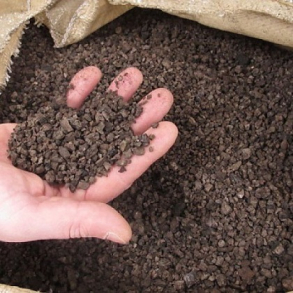
Expanded granulated cork for acoustic and thermal insulation 2-4mm - 120l (0,12m3) - 10kg
Amorim IsolamentosEGC24
- secure payment!
- cheap shipping!
- express delivery!
- cheap shipping!
- express delivery!
In stock
156,07 USD
(excl. VAT)

Choosing the right insulation isn't just about finding the cheapest option. While low-cost materials might seem like a smart deal upfront, they can often lead to headaches and additional expenses down the road. Plus, not every product fits tight spaces or meets safety requirements. That's why expanded cork insulation stands out – it's durable, moisture-resistant, dependable, and environmentally sound from start to finish.
Strong & Lightweight

100% Natural Composition

Premium Insulating Power

Built to Last

Eco-Conscious Manufacturing

Safe for All Applications
The available fractions are 2–4 mm, 2–9 mm, 4–8 mm, and 3–15 mm.
It’s composed of expanded cork granules—a lightweight, all-natural material that delivers superior insulating performance compared to standard cork.
The cork is harvested from cork oak trees and undergoes a high-temperature process that causes it to expand and darken naturally—no chemicals involved. The transformation is possible thanks to suberin, a substance in cork that acts like a natural binder when exposed to heat.
They're commonly used in construction applications, such as:
They're also popular outside of construction, including:
For starters, it delivers excellent thermal and acoustic insulation. It performs better than traditional cork when it comes to both sound and temperature control.
Additional key benefits include:
Yes, absolutely. This product has been certified by the Polish National Institute of Public Health. It’s allergy-friendly and won’t cause skin irritation. At present, we are the only certified distributor of this particular grade in Poland.
Yes, it is. Cork is harvested from trees without damaging them—the bark regenerates naturally every 9 to 12 years. A single cork oak can continue producing for over 200 years!
Cork also contributes to a carbon-negative footprint. These trees absorb up to four times more CO₂ than the average species.
When installed properly, expanded cork insulation can retain its performance characteristics for as long as 50 years.
It has a rich, dark brown hue—the result of the heating process. No dyes or artificial coloring are added, which gives it a raw, earthy aesthetic.
Granules ranging from 2–9 mm typically have a density of around 70–80 kg/m³ (4.4–5.0 lb/ft³).
Yes, you can also get expanded cork as rigid sheets for thermal insulation.
Foam insulation is synthetic, prone to deterioration, and contributes to greenhouse emissions. Over time, it can lose its airtight seal or break down entirely.
Expanded cork, on the other hand:
Keep the material dry and in a well-ventilated area. Avoid humid basements, outdoor tarps, and direct sunlight or heat sources.
Bottom line: store it in a cool, dry, and shaded space with good airflow.
Many folks think going green means settling for less. But let’s be real — your home isn't where you want to cut corners. Expanded cork isn’t a gamble — it’s a proven, high-performance material that beats synthetics hands-down. You don’t have to choose between eco-friendly and effective — you get both.

If you’ve ever picked up cheap foam insulation, you know the deal — it might save you a buck at first, but it usually doesn’t hold up. Expanded cork plays by different rules. Once it’s installed, it stays put — delivering consistent performance for the long haul.
Some materials just can’t cut it when it comes to granules — they break apart, clump up, or lose form. Expanded cork stays loose and reliable. Lightweight, stable, and steady. This isn’t about stuffing a hole — it’s about long-term insulation that works year after year.
We’re surrounded by plastic, polystyrene, and synthetic foams — and most of it ends up in landfills or polluting nature. What’s worse, the energy used to make them is sky-high. The trade-off? Quick fixes with long-term damage. Expanded cork changes the game — it works with nature, not against it. No mess. No toxins. Just sustainable living.
And here’s the wild part — cork trees naturally regrow their bark. No chopping, no destruction. Yet we still default to plastic. Sure, it looks cheaper, but the environmental price is steep. Cork flips the script. No waste. And those trees? They suck up serious amounts of CO₂ — fighting climate change with zero downsides.
When you heat corn, it pops. Cork acts in a surprisingly similar way — no oil, no microwave, just pure science.
It all starts with cork oak bark. Experts remove it carefully so the tree stays healthy. Then it’s heated to high temps. The cork expands, darkens, and swells. Suberin — a natural plant-based binder — kicks in to hold it all together.
This process creates seriously powerful insulation. It locks in warmth, blocks out noise, and works better than you’d expect from something so natural.
Expanded cork granules are super light — easy to haul, easy to install, and perfect for weird corners where traditional boards just won’t fit.
Unlike foam or fiberglass, cork won’t irritate your skin or your lungs. It’s hypoallergenic, VOC-free, and completely safe for your family — and your pets too.
| Fraction | 3-15 mm |
| Volume | 120 l (0,12 m³) - 10 kg |
| Color | Dark brown |
| Material | Expanded cork |
EGC24
In stock
156,07 USD
(excl. VAT)
EGC310
In stock
156,07 USD
(excl. VAT)
EGC48
In stock
156,07 USD
(excl. VAT)
EGC24
In stock
305,92 USD
(excl. VAT)Customers who bought this product also bought

AK12-4
In stock
128,09 USD
(excl. VAT)
PK010-20
In stock
277,90 USD
(excl. VAT) Secure payments
 cheapest delivery
 Highest quality
 Satisfaction Guarantee