
FREE SHIPPING FOR ALL ORDERS. ORDER NOW!

Currency:

Granulated cork insulation

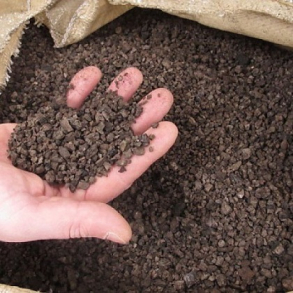
High-performance insulation is often associated with thick, rigid boards. However, real-world construction rarely offers perfectly straight lines or easy access. Tight cavities, uneven surfaces, and awkward corners require a more adaptable approach. That’s where expanded cork granules make a real difference. Lightweight and easy to handle, they flow into gaps and conform to irregular spaces with minimal effort. As a 100% natural material, they combine practicality with sustainability. An efficient choice for insulating hard-to-reach areas quickly—without compromising on performance or environmental responsibility.


Have questions about expanded cork insulation? Here’s what you need to know.

WHAT IS EXPANDED CORK GRANULATE USED FOR?

Expanded cork granulate is a loose-fill natural insulation material designed to fill cavities, gaps, and hard-to-reach voids. It’s made from the bark of cork oak trees — the same renewable material used for wine corks and bulletin boards. During manufacturing, the granules are heated, causing them to expand and increase in volume. This process enhances their insulating structure and darkens their color. No artificial binders are added: heat activates suberin, a natural compound found in cork, which bonds the granules together.

WHERE DOES EXPANDED CORK INSULATION PERFORM BEST?

Expanded cork works especially well in areas where rigid insulation boards simply don’t fit — such as irregular framing spaces, attic corners, subfloor cavities, and other tight or uneven areas.


It’s an excellent solution if you:

  • need to insulate an attic with complex angles or obstructed access,
  • want to fill empty wall cavities that aren’t suitable for board insulation,
  • are insulating between roof rafters in a pitched roof system,
  • have crawl space or subfloor voids that are difficult to access,
  • need to top off existing insulation or seal gaps where other materials fall short.

Keep in mind that cork granulate is not a load-bearing material. It won’t replace structural subfloor, concrete topping, or rigid insulation panels. It’s also not intended for applications requiring a perfectly smooth finished surface.

Not sure if expanded cork is right for your project? Reach out — we’re happy to help you evaluate your options.

WHY IS EXPANDED CORK CONSIDERED A HIGH-PERFORMANCE INSULATION MATERIAL?

Expanded cork delivers reliable thermal insulation while also helping reduce airborne noise. Compared to standard cork materials, the expanded form provides improved insulating efficiency.


Key advantages include:

  • lightweight composition that minimizes structural load,
  • natural resistance to mold, mildew, and pests,
  • long-term dimensional stability without settling,
  • a renewable, biodegradable material profile.

MINERAL WOOL OR EXPANDED CORK — WHICH IS THE BETTER CHOICE?

Based on practical field experience, expanded cork offers long-lasting performance and dependable insulation value.

It helps reduce heat transfer and dampens sound without absorbing moisture or compacting over time. Unlike some mineral-based insulations, cork maintains its structure and effectiveness for decades. While mineral wool may have a lower upfront cost, its performance can decline more quickly.

Expanded cork is also a safer and more sustainable alternative. It contains no irritating fibers, releases no harmful emissions, and has a significantly smaller carbon footprint than many conventional insulation products.


Expanded cork granulate is particularly useful in renovation projects and custom builds where traditional insulation boards aren’t practical — especially in tight framing sections, irregular cavities, or retrofit applications. As a loose-fill material, it naturally conforms to the shape of the space without cutting, forcing, or adhesives.


Its durability is another major advantage. Expanded cork retains its insulating properties for decades, often estimated at 40 to 50 years without the need for replacement. Many insulation materials lose effectiveness over time, shift, or require upgrades — cork remains stable and consistent.


Sustainability is built into the material itself. Cork is harvested from the bark of cork oak trees without cutting the tree down. The bark regenerates every 9–12 years, allowing a single tree to produce raw material for more than 200 years. Additionally, cork oak forests absorb significantly more CO₂ than many other tree species, making cork insulation part of a climate-conscious building strategy.

Secure payments
cheapest delivery
Highest quality
Satisfaction Guarantee