

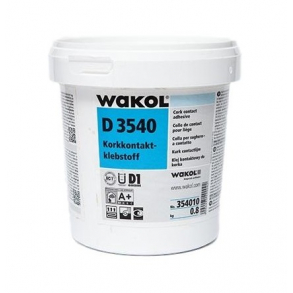
Cork contact adhesive Wakol D 3540 0,8kg
WakolD3540-0,8
- secure payment!
- cheap shipping!
- express delivery!
- cheap shipping!
- express delivery!
In stock
131,74 USD
(excl. VAT)

Most people are familiar with polystyrene insulation — it’s inexpensive and widely used. When the only priority is the lowest possible price, it often gets the job done. But what if you’re looking for something better? Many homeowners tell us they’re tired of cold walls, echoing rooms, and materials that trap moisture inside their walls. Quite often they say they simply don’t want to insulate their home with polystyrene and would prefer a natural alternative. In those cases we recommend Expanded Cork Insulation — a material that is completely natural. It’s a great solution if your walls feel cold, if you want a quieter indoor environment, or if you prefer natural insulation instead of synthetic products. If you’re wondering whether expanded cork could work in your home, keep reading — below we explain how it works and when it makes sense to use it.

100% Natural Insulation

Year-Round Comfort

Lower Energy Costs

No Chemical Additives

A Warmer, Quieter Home

Built to Last
Expanded cork is a completely natural insulation material manufactured in the form of rigid boards. The production process is often compared to making popcorn. Cork granules are heated to extremely high temperatures — over 350°C (about 660°F). During heating, the granules expand dramatically and increase in volume. This creates a unique structure made up of millions of microscopic air pockets.
These tiny air-filled cells are what give cork its outstanding insulation performance. The material works similarly to a natural thermos — slowing heat transfer while also helping reduce sound transmission.
During the heating process, cork releases a natural resin called suberin. This resin acts as a natural binder, causing the granules to stick together and form solid boards. Because of this, no synthetic adhesives or chemical additives are required. The final product remains entirely natural.
The finished insulation boards are lightweight yet durable and offer low thermal conductivity (λ approximately 0.036–0.040 W/mK). Expanded cork also absorbs sound waves, which can significantly reduce noise depending on how the building assembly is designed.
Expanded cork helps solve several common building and comfort issues. For example, cold interior walls, rooms that overheat in summer, or echo and unwanted noise.
It’s especially useful when:
However, expanded cork may not be ideal if:
Not sure if expanded cork is the right solution for your project? Contact us. Tell us about your wall, room, or insulation challenge and we’ll help you choose the best option.
Many cork products you may already know — such as flooring underlayment, cork boards, or decorative wall panels — are made from agglomerated cork. This type of cork consists of granules bonded together using adhesives. It typically has a lighter color and smoother surface and is often used as a decorative or finishing material.
Expanded cork, on the other hand, has a dark brown to nearly black color and a more porous texture. It offers stronger insulating performance and is designed specifically for thermal and acoustic insulation.
If you need a decorative cork surface or a thin finishing layer, traditional agglomerated cork works well. If your goal is effective insulation and sound reduction using a natural material, expanded cork is the better option.
Yes. Expanded cork is known for its long lifespan and structural stability. Its natural composition contains suberin, which helps protect the material from moisture and microorganisms. As a result, cork resists mold, insects, and rodents.
The boards also maintain dimensional stability across an extremely wide temperature range — from roughly –180°C to +120°C. The material complies with EN 13170 and EN 13172 standards and carries the French A+ indoor emissions rating, indicating very low emissions of volatile substances.
Polystyrene is less expensive, which is its main advantage. It’s widely used in construction, but it provides very little benefit when it comes to improving room acoustics.
Expanded cork costs more, but it offers several additional benefits beyond thermal insulation. It’s a natural material that improves both energy efficiency and indoor acoustic comfort.
Here’s a quick comparison:
In short: if price is the only factor, polystyrene may work. If comfort, durability, and natural materials matter more, expanded cork is the superior option.
Yes. Before installation, leave the cork boards in the room for about 72 hours so they can adjust to the temperature and humidity conditions.
We recommend using Wakol D-3540 contact adhesive for cork installation. This is the product we use ourselves when installing cork panels.
You’ll need approximately 100 grams of adhesive per board. That means:
For best results, make sure the wall surface is clean, dry, and level before applying the adhesive.
Standard expanded cork boards are typically designed for indoor applications. If you plan to use cork on an exterior wall or façade, this type of expanded cork would be the more suitable option.
Yes. Cork is lightweight, easy to cut, and works well in terrariums that mimic natural environments. However, if you are specifically designing a terrarium, we also offer a dedicated category with branches, tubes, and other decorative elements made from natural cork.
Yes. Specialized cork paints are recommended, although high-quality wall paints can also be used.
Keep in mind that expanded cork has a porous and uneven texture, so achieving a perfectly smooth and fully covered finish may require additional coats.
Do your walls always seem cold to the touch? Even with the heat running, your home just doesn’t feel as warm as it should? Meanwhile, your energy bills keep climbing, yet true comfort remains out of reach. That’s exactly why more homeowners are turning to expanded cork — a smart solution that tackles these issues head-on.

Expanded cork delivers outstanding thermal insulation, helping your home maintain a consistent and comfortable indoor temperature. During colder months, heat stays inside where it belongs, while in the summer, rooms warm up much more gradually. The result? Lower energy usage for both heating and cooling — and year-round comfort you can actually feel.
Another major advantage is durability. Expanded cork boards can perform reliably for decades — often up to 50 years. It’s a one-time investment that keeps paying off, without the need for frequent replacements or ongoing maintenance.
Expanded cork stands out as one of the few insulation materials that is completely natural. It’s made solely from cork granules, without synthetic binders, glues, or chemical additives. It doesn’t release harmful emissions, doesn’t create dust, and is an excellent choice for homes where indoor air quality matters — especially for families with children or allergy concerns.
Your home is where you spend most of your time, so it makes sense to think beyond just performance and appearance. It’s equally important to consider what your materials are made of. Since we’re already surrounded by plastics in everyday life, reducing them at home is a step in the right direction.
Cork is a sustainable and environmentally responsible material. While many products today claim to be “green,” cork truly lives up to that promise. It’s harvested from the bark of cork oak trees without cutting them down. Even more interesting — as the bark regenerates, the tree absorbs significantly more CO₂, making cork production remarkably low-impact.
By comparison, materials like foam insulation or mineral wool don’t measure up as well. Their manufacturing processes require significant energy and place a heavier burden on the environment. Cork, on the other hand, is renewable, natural, and genuinely eco-friendly — no marketing gimmicks needed.
| Format | Board |
| Color | Dark brown |
| Length | 1000 mm |
| Width | 500 mm |
| Thickness | 25 mm |
| Material | Expanded cork |
| Installation | Glue |
D3540-0,8
In stock
131,74 USD
(excl. VAT)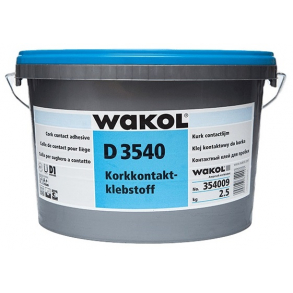
D3540-2,5
In stock
147,86 USD
(excl. VAT)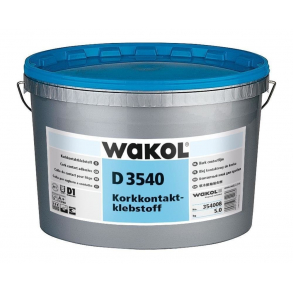
D3540-5,0
In stock
169,75 USD
(excl. VAT)
041004005
- secure payment!
- cheap shipping!
- express delivery!
In stock
149,00 USD
(excl. VAT)
3083
In stock
128,51 USD
(excl. VAT)
ZPM
Delivery time: 1 week
144,83 USD
(excl. VAT)
ZPD
Delivery time: 1 week
158,62 USD
(excl. VAT)Customers who bought this product also bought

EXP105001000
In stock
137,14 USD
(excl. VAT)
WP
In stock
128,01 USD
(excl. VAT)
GK0510
In stock
122,20 USD
(excl. VAT)
RK-4U
In stock
151,46 USD
(excl. VAT) Secure payments
 cheapest delivery
 Highest quality
 Satisfaction Guarantee