



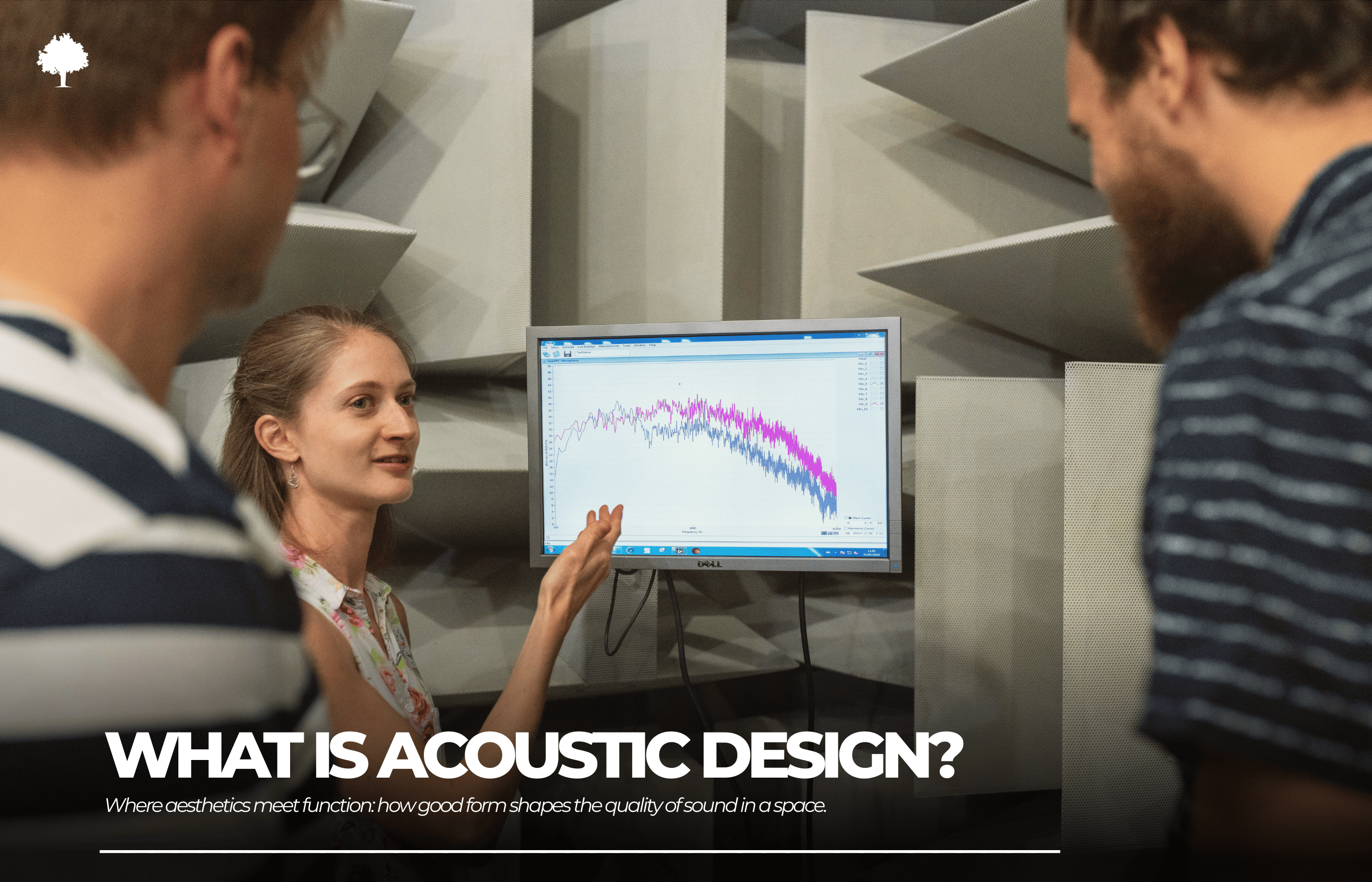
Contemporary architecture and interior design are no longer limited solely to aesthetics or functionality. Increasing importance is being placed on acoustic comfort—an aspect that until recently was often overlooked in both residential and commercial spaces. Acoustic design responds to the needs of modern users who expect not only visual appeal, but also calm, privacy, and harmony in everyday life.
In this article, we take a closer look at what acoustic design really is, the problems it addresses, and why its role continues to grow in modern construction and interior design.
Table of Contents
1. Introduction
2. Acoustic design – what is it?
3. Materials used in acoustic design
4. Natural cork
5. Summary
6. FAQ
Acoustic design – what is it?
Acoustic design is an interdisciplinary approach to interior and spatial design that combines aesthetics with acoustic performance. Its primary goal is to create an environment that not only looks good, but also provides optimal sound comfort. This involves the conscious management of sound within a space—through diffusion, absorption, and insulation—so as to achieve the desired acoustic quality without compromising visual appeal.
How does it differ from traditional design?
In traditional interior design, visual aspects tend to take priority—colour palettes, forms, textures, and lighting dominate the process. Aesthetics often outweigh other functional considerations, which can result in sound-related issues being overlooked. Hard surfaces, large glazed areas, and minimalist layouts—while visually striking—can lead to reverberation, echo, and overall noise that negatively affects everyday comfort.
Acoustic design goes a step further. From the very beginning of the design process, it takes into account the acoustic properties of a space. The aim is not merely to soundproof interiors, but to shape them so that sound feels natural, pleasant, and appropriate to the function of the room. In a living room, this may involve controlling reverberation for clearer music and conversation; in a bedroom, ensuring silence and insulation from external noise; and in an office, eliminating distracting background sounds.
Materials used in acoustic design
Materials used in acoustic design must meet two fundamental criteria:
-
Acoustic performance – the ability to absorb, diffuse, or isolate sound.
-
Aesthetic qualities – the ability to blend harmoniously with the style of a given interior, whether modern, classic, or industrial.
Unlike standard decorative materials, acoustic solutions are designed to interact directly with sound waves. It is not enough for them to look good—they must also perform acoustically, improving listening comfort within the space.
Examples of acoustic materials (excluding cork):
-
Mineral wool (stone or glass)
Known for its excellent sound-absorbing properties. Although usually concealed behind fabrics or perforated panels, it is one of the most effective materials for reducing noise. -
Acoustic fabrics
Thick, specially woven textiles that serve a dual purpose: decorative and sound-absorbing. Commonly used in curtains, partitions, and wall upholstery. -
Perforated or grooved wood
When properly designed, it can diffuse sound waves, reduce echo, and improve sound clarity. Frequently used in concert halls, offices, and refined residential interiors. -
Technical felt panels (PET)
Made from recycled PET bottles, they combine an eco-conscious approach with high acoustic performance. Lightweight, visually appealing, and easy to customise in terms of colour and shape. -
Acoustic plasterboards
While not typically associated with design flexibility, they can be highly effective, especially in large public spaces. Available in perforated forms or with mineral additives that absorb sound.
Natural cork
Among the wide range of materials used in acoustic design, natural cork holds a unique position. It is one of the most commonly applied materials, combining outstanding sound-absorbing properties with aesthetic appeal and an environmentally friendly character.
Why cork?
Natural cork is derived from the bark of the cork oak and is a fully renewable material. Its microstructure consists of millions of closed air cells. As a result, cork:
-
absorbs sound waves, reducing reverberation and improving room acoustics,
-
dampens external noise, acting as an effective insulating barrier,
-
minimises impact sound transmission, such as footsteps or floor-borne noise,
-
enhances sound quality, delivering a more natural and softer acoustic experience within interiors.
Versatility and aesthetics
Cork fits seamlessly into contemporary design trends—its warm, organic texture complements minimalist interiors as well as Scandinavian, eco, or Japandi styles. It can be used in the form of:
-
wall panels,
-
ceiling cladding,
-
floor coverings,
-
furniture and decorative elements.
It is lightweight, easy to process and install, while offering excellent durability. In addition, cork does not attract dust or allergens, making it an ideal material from a health perspective as well.
Summary
Acoustic design is far more than a trend or a technical upgrade—it is a holistic approach to spatial design in which aesthetics and sound coexist in full harmony. In a world where the pace of life continues to accelerate and privacy and comfort are increasingly valued, well-designed acoustics become a true luxury.
Investing in acoustics is not only about comfort—it is a conscious choice in favour of quality and lifestyle. Acoustic design makes it possible to create spaces that are quiet, functional, and visually refined, without sacrificing one for the other.
FAQ
1. How does acoustic design differ from standard soundproofing?
Acoustic design is not just about reducing noise—it involves the deliberate shaping of space to improve sound quality and overall acoustic comfort. It addresses both the reduction of external noise and the control of reverberation within interiors. Unlike traditional soundproofing solutions, it integrates acoustic performance with visual design.
2. Can acoustic design be applied in apartments or single-family homes?
Absolutely. Acoustic design is not limited to concert halls or office spaces—it works equally well in private interiors, from living rooms and bedrooms to home offices and relaxation zones. It is especially recommended for those who value peace, privacy, and a high standard of living.
3. Do acoustic solutions have to look technical or unattractive?
No. Modern acoustic materials are designed with aesthetics in mind. Decorative panels, fabrics, wood, felt, or natural cork are available in a wide range of forms, colours, and textures, allowing them to become an integral part of the interior—both elegant and functional.


