



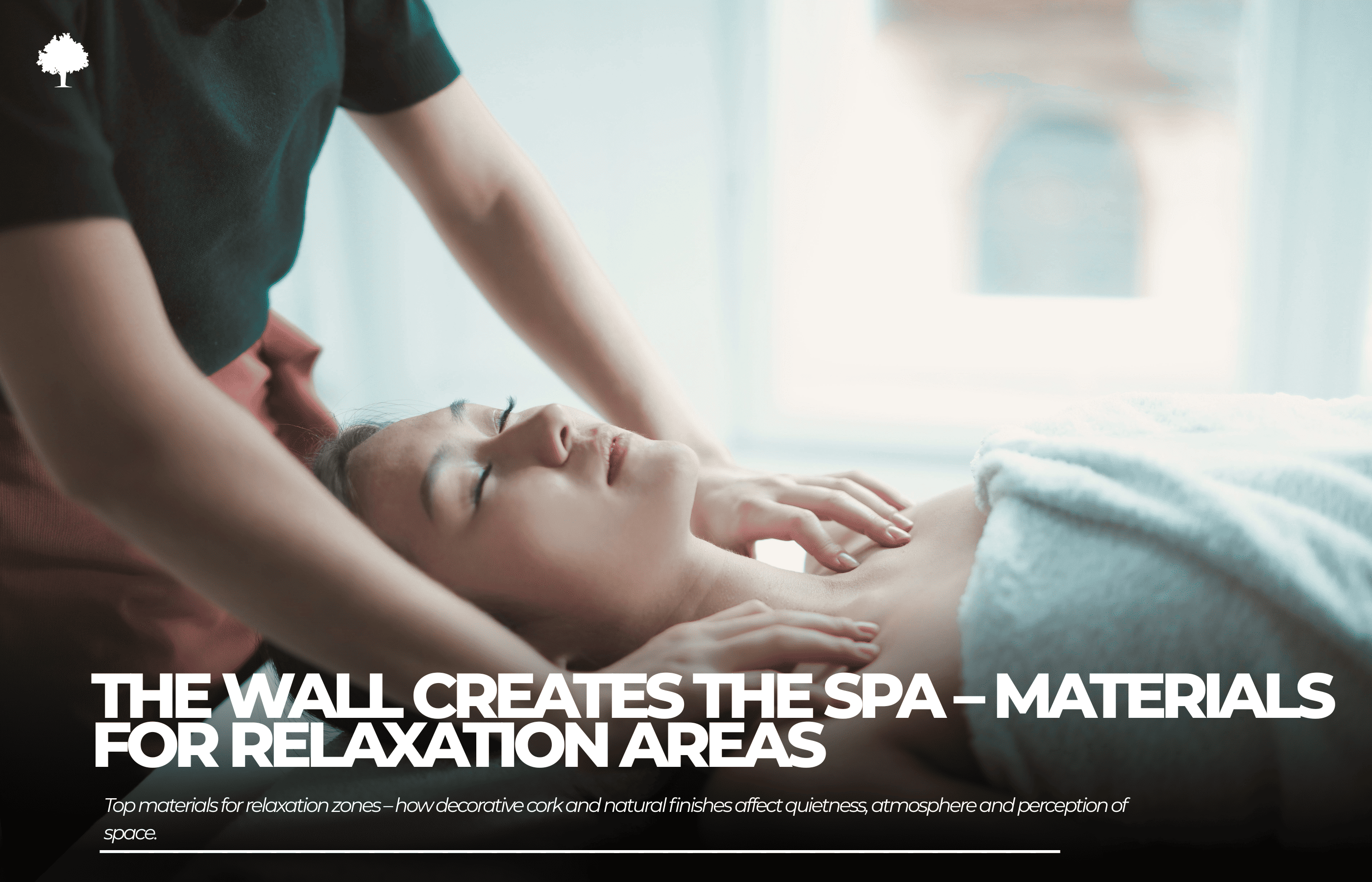
Modern SPA is more than just a collection of treatments — it is a carefully designed sensory journey, with its script written by space itself. The interior architecture of the relaxation zone plays a key role in creating atmosphere, calm, and regeneration. Contrary to appearances, it is not luxurious loungers, the sound of waves, or the aroma of essential oils that form the foundation of the experience. Everything begins with… the wall.
A wall in a relaxation zone is not merely a structural element. It is a carrier of emotions, a boundary between the outside world and an interior of silence. The materials, textures, and colours used in its finish determine the room’s acoustics, the quality of perceived stimuli, and the client’s final impression. In premium-class SPA facilities, there is no room for randomness — every detail matters, and the choice of the right finishing material becomes part of the well-being philosophy.
In this article, we take a closer look at the most highly recommended finishing materials for relaxation zones — those that combine aesthetics with functionality, and design with deep user comfort.
Table of Contents
1. Introduction
2. Walls that relax
3. Aesthetics meets functionality – what should a good SPA wall offer?
4. Decorative natural cork – the new favourite of SPA designers
5. Wood: the classic of natural warmth
6. Stone: the power of nature in an elegant form
7. Summary
8. FAQ
Walls that relax
Aesthetics as a tool for relaxation
SPA spaces have long ceased to be merely places where treatments are performed. They are carefully arranged environments designed to engage all the senses, guiding the client toward deep relaxation. In this equation, interior design plays the role of a therapist — subtle, yet remarkably effective.
Architecture and design are not just a backdrop here, but active participants in the regeneration process. A refined composition of colours, materials, and light creates an atmosphere that calms, soothes, and allows guests to disconnect from everyday noise. For this reason, designing relaxation zones begins not with equipment or technology, but with the emotions meant to accompany the guest from the very first step.
Sight – the first step toward relaxation
Sight is the dominant sensory channel in any space. What we see directly affects our heart rate, muscle tension, and stress levels. That is why the colours and textures of walls in relaxation zones must be selected with the utmost care.
Natural materials and shades — beiges, sands, muted greens, graphite tones — evoke associations with nature, which for centuries has been linked to calm and balance. Matte surfaces help diffuse light, reduce contrast, and eliminate visual noise. Textures inspired by stone, wood, or fabric help create a sense of cosiness and authenticity, essential for complete relaxation.
In SPA environments, there is no room for chance. Every choice — from colour to texture — must be part of a coherent narrative with one goal: deep, conscious relaxation.
Aesthetics meets functionality – what should a good SPA wall offer?
In designing relaxation interiors, aesthetics never exist independently of functionality. Even the most striking arrangement loses its purpose if it fails to meet the demands of intensive use, humidity, or hygiene standards. That is why walls in SPA spaces must not only look impressive but also actively support comfort — for both guests and staff.
Materials resistant to moisture, sound, and everyday use
Walls in SPA zones are exposed to changing conditions — increased humidity, steam, and heavy use. For this reason, a key feature of finishing materials is water resistance.
Equally important is acoustics — effective sound insulation directly enhances the quality of relaxation.
Ease of maintenance also matters greatly — especially in heavily used areas. Materials should be resistant to abrasion and stains while retaining their visual appeal despite regular cleaning.
Microclimate and well-being
High-quality materials “breathe” — they regulate indoor humidity levels and help maintain a healthy microclimate. Some natural materials, such as natural cork, have antibacterial properties. These types of “living” walls support the body’s regenerative processes through subtle yet effective interaction with the surrounding environment.
Colours and textures that promote calm
Colour schemes and surface textures play a crucial role in how a space is perceived emotionally. Relaxation zones are dominated by earth tones, muted pastels, soft greens, and warm greys. Such palettes encourage relaxation, do not overstimulate the nervous system, and instead help restore a sense of balance.
Textures should be matte, soft in appearance, preferably with an organic structure, reminiscent of stone, linen, clay, or sand. Glossy, cold, and synthetic finishes are avoided — their sterility disrupts the sense of comfort so essential to relaxation.
Decorative natural cork – the new favourite of SPA designers
In the world of wellness space design, increasing attention is paid to materials that combine aesthetics, sustainability, and health-supporting properties. Against this backdrop, one material stands out — once underestimated, today featured in the most prestigious SPA projects: decorative natural cork.
What is decorative cork and why is it gaining popularity?
Decorative natural cork is made from the bark of the cork oak — a fully renewable resource harvested without harming the tree. Once associated mainly with technical applications, this material has undergone a transformation thanks to modern processing technologies and contemporary design. Today, natural cork returns in a new role — as an elegant, eco-friendly, and sensory component of SPA interiors.
The growing interest in natural cork stems from its versatility and its alignment with the slow design philosophy. Designers focused on harmony with nature and authenticity increasingly choose cork as a material that warms the space, improves acoustics, and lends interiors an organic, welcoming character.
Natural properties that work in favour of relaxation
Decorative natural cork offers unique properties that make it an ideal choice for relaxation zones:
-
Sound absorption – the cellular structure of natural cork acts as a natural acoustic insulator. It quiets the space, absorbs reverberation, and eliminates background noise, allowing silence and comfort to be experienced more deeply.
-
Warmth and softness – natural cork is pleasant to the touch and maintains a temperature close to that of the human body. In SPA environments, where touch plays a vital role, this property fosters a sense of safety and relaxation.
-
Water resistance – despite its porous structure, natural cork is resistant to moisture and mould.
Patterns and colours – from raw nature to luxurious minimalism
Modern collections of decorative natural cork impress with their diversity. One can choose from raw, irregular surfaces inspired by untreated bark, as well as elegantly polished, dyed versions in shades of graphite, white, broken beiges, or deep green.
Wood: the classic of natural warmth
For centuries, wood has accompanied humanity in creating spaces for rest and relaxation. Its natural texture, warm tone, and distinctive scent create an aura of authentic calm. In SPA environments, wood serves not only an aesthetic function — it becomes an emotional medium that introduces peace, harmony, and closeness to nature. It is no surprise that premium designers so readily choose this material.
Wood species ideal for SPA zones
In areas exposed to moisture, high temperatures, and intensive use, selecting the right wood species is essential. The most commonly used include:
-
Red cedar – exceptionally durable, moisture-resistant, with a distinctive, soothing aroma. Ideal for saunas and relaxation zones.
-
Thermally treated ash or pine – heat treatment increases biological resistance and dimensional stability.
-
Exotic woods (e.g. merbau, iroko, teak) – characterised by high oil content and natural resistance to fungi and water.
-
Oak – elegant and noble, suitable for dry relaxation areas and as wall cladding.
Each of these species combines aesthetics with functionality, but their application depends on specific conditions — room humidity, temperature, and the intended interior style.
Pros and cons: moisture, maintenance, durability
Advantages of wood:
-
Adds warmth and cosiness to interiors — relaxing on a subconscious level.
-
A natural and renewable material, aligned with eco-conscious design trends.
-
Hygroscopic properties — helps regulate air humidity.
-
Pairs beautifully with other natural materials: stone, clay, natural cork.
Challenges:
-
Requires careful maintenance — regular oiling or protection with specialist products.
-
May deform due to moisture and temperature changes if not properly protected.
-
In high-humidity spaces, it requires appropriate installation (e.g. expansion gaps, surface ventilation).
High-quality wood, properly selected and protected, not only retains its properties for many years but also gains in character over time.
The “sauna effect” – wood that envelops
Wood works best in SPA environments where it comes into contact with the body — on walls, ceilings, floors, and built-in elements perceived directly by the user. In enclosed relaxation spaces, it creates a sauna-like effect: warmth, intimacy, and calm. When surrounded by this material, the body responds with slower breathing, relaxed muscles, and a sense of safety.
Stone: the power of nature in an elegant form
In the design of SPA relaxation spaces, stone holds a unique position. It symbolises durability, calm, and authenticity. Its presence creates an aura of stability and tranquillity — allowing users to feel connected to raw, untouched nature. But stone is more than a metaphor. It is also a material with exceptional physical and aesthetic properties, perfectly suited to the demanding conditions of SPA environments.
Types of stone: slate, travertine, marble
In SPA spaces, three types of natural stone are most commonly used, each bringing a distinct character and functional qualities:
-
Slate – features a bold, raw texture. It fits perfectly into nature-inspired aesthetics, evoking rock caves or mountain streams. Thanks to its resistance to moisture and abrasion, it is ideal for wet zones such as showers, steam rooms, or saunas.
-
Travertine – visually light, with a porous structure and distinctive pattern. Often used in luxurious dry zones — waiting areas, relaxation rooms, or treatment suites. Available in warm shades of beige, sand, and honey, it introduces a Mediterranean sense of calm.
-
Marble – the essence of elegance. Smooth, cool, and refined. Frequently chosen for representative entrance zones, receptions, or elegant treatment rooms. Combined with warm materials such as wood or natural cork, it creates a sophisticated contrast.
Natural coolness and thermal contrast
Stone has one of the most distinctive sensory qualities — natural coolness. In SPA zones, this is not a drawback but a value, consciously used as an element of thermal contrast, stimulating circulation, supporting regeneration, and enhancing wellness rituals.
The cool surface of stone — for example in shower areas after a sauna — provides a sensation of purification and invigorating refreshment. When combined with underfloor or wall heating, its thermal mass ensures long-lasting, even heat release.
Application in wet and dry zones
Thanks to its resistance to water, mould, and detergents, stone performs excellently in wet zones: steam baths, shower cabins, jacuzzis, pools, and saunas. It does not deform, absorb odours, and is easy to keep clean.
In dry zones — such as relaxation rooms, massage suites, or quiet lounges — stone introduces visual stability. It can be used as a dominant wall material or as an accent, in the form of decorative panels, textured strips, or sculptural 3D elements.
Regardless of location, well-designed use of stone creates a sense of prestige and durability — values sought by high-end SPA clients.
Summary
Designing relaxation zones in SPA spaces is the art of combining functionality with top-tier aesthetics. In this art, walls play a far greater role than one might expect. They set the rhythm of the experience — from the first visual contact, through acoustics and microclimate, to the final sense of comfort and calm.
Choosing the right wall materials is a strategic decision. Decorative natural cork introduces natural softness and excellent acoustic performance. Wood warms the space and soothes the senses, although it requires care and knowledge of proper maintenance. Stone brings a sense of stability, prestige, and the power of nature, without sacrificing elegance or durability. Each of these materials has its own unique character and moment to shine — the key lies in their conscious application.
FAQ – frequently asked questions
1. Doesn’t cork look too “eco” for premium-class interiors?
Modern decorative natural cork is a material of high aesthetic quality. It is available in luxurious dyed versions, with refined textures and forms suited both to naturalistic interiors and contemporary minimalist premium spaces.
2. Which wood works best in a sauna or relaxation zone?
For wet zones and saunas, red cedar, thermally treated wood, or exotic oily species (e.g. iroko, teak) are recommended. In dry areas, oak or ash also perform very well.
3. Doesn’t stone make interiors feel cold and uninviting?
Stone does create a cooling effect, but when combined with appropriate lighting, wood, or natural cork, it forms a balanced composition. Additionally, in dry zones it can be paired with surface heating to enhance user comfort.
4. Which wall colours best support relaxation?
Muted, nature-inspired shades — beiges, greens, graphite tones, off-whites, and pastels. Surface mattness is also important, as it reduces glare and has a soothing effect on the eyes.


