



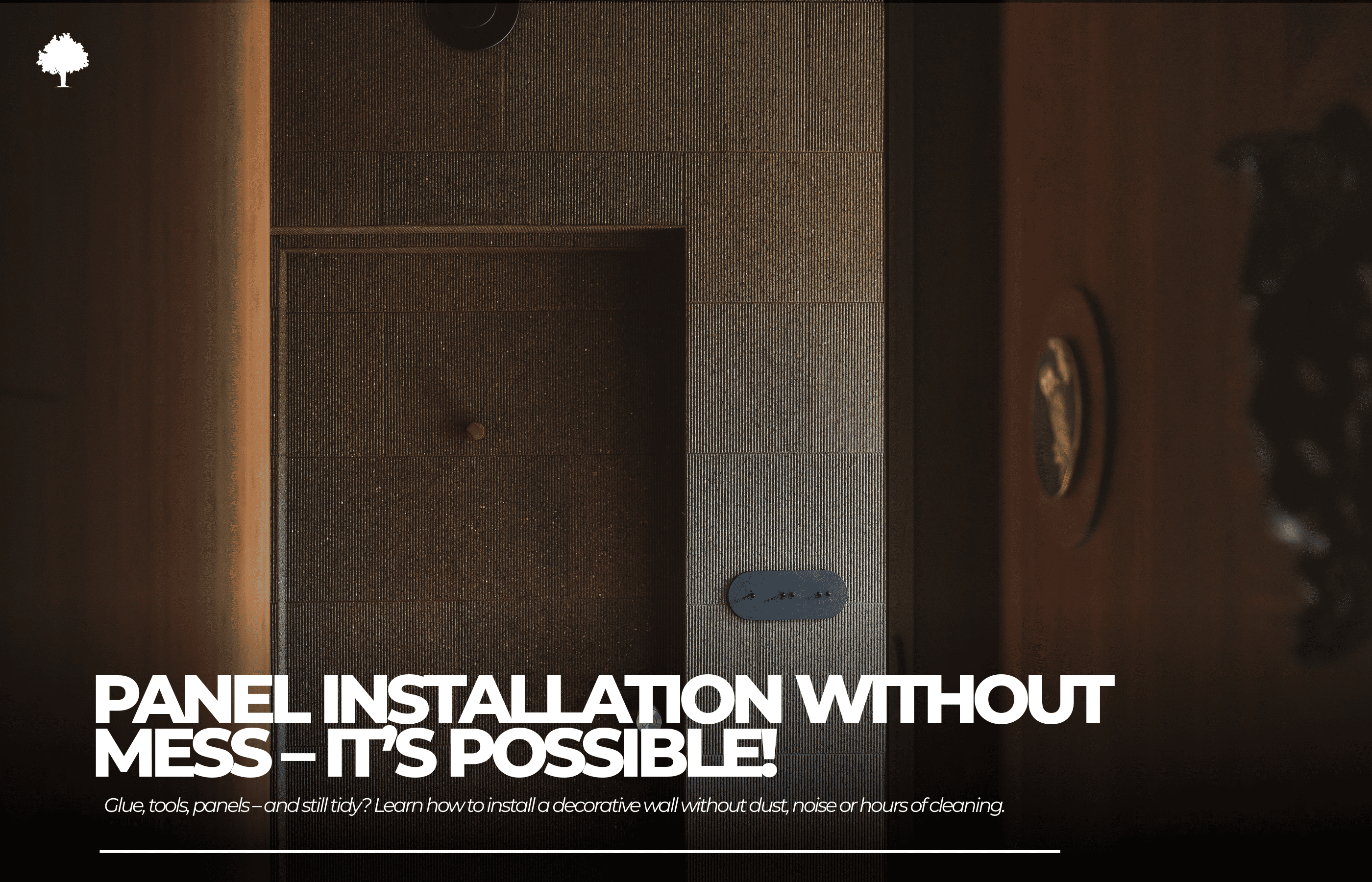
Wall installation can be both a rewarding and a frustrating experience. The excitement of transforming an interior often fades when, after a few hours of work, the workspace looks like a glue disaster: adhesive spills on the floor, glue dripping down the wall, and sticky stains on your hands. This isn’t just an aesthetic issue — it also increases the risk of damaging materials and prolonging the entire process.
In this article, we’ll show you how to achieve a clean wall installation that not only meets visual standards but also helps you maintain order from start to finish.
Table of Contents
1. Introduction
2. What most commonly goes wrong during wall cladding installation?
3. Clean alternatives: what to use instead of traditional glue?
4. Summary
5. FAQ
What most commonly goes wrong during wall cladding installation?
At first glance, installing wall cladding may seem simple: prepare the surface, apply glue, attach the board or panel, trim it — and that’s it. However, in practice, even people with some experience make mistakes that result not only in visual flaws but also in financial losses and the need to redo part of the work. Understanding the most common issues is key to avoiding chaos and achieving the intended result.
Problematic adhesives — where does the glue mess come from?
The biggest source of frustration is usually the adhesive — a material that is supposed to bond, yet often just irritates. What typically goes wrong?
-
Too thin a consistency causes the glue to drip during application and slide down the surface, leaving difficult-to-remove marks on floors and walls.
-
Long drying time means the material doesn’t bond quickly, requiring repeated adjustments and pressure — each an opportunity to stain hands, tools, and the surrounding area.
-
High stickiness — although desirable — becomes a problem when the glue clings to hands and tools, creating strings and stains that later require chemical cleaning.
-
Some adhesives leave permanent discolouration on porous surfaces (e.g., gypsum plaster), making them unsuitable for decorative applications.
The most common mistakes — what should you watch out for?
-
Using too much glue
Many assume that “more is better”. Unfortunately, excess glue seeps out from beneath the cladding, leaving stubborn stains. With delicate materials (such as veneer or decorative boards), it may even cause permanent damage. -
Improper surface preparation
Glue will never compensate for a poorly prepared surface. Dust, dirt, or loose plaster reduce adhesion. The user may think “the glue doesn’t work”, when in fact the substrate is to blame. -
Skipping a test fit
Skipping the so-called “dry fitting” leads to frantic adjustments after the adhesive has been applied. Every additional movement increases the risk of stains or material damage. -
Using the wrong tools
Working with tools that aren’t suitable for the task leads quickly to crooked installation and unnecessary material waste.
Clean alternatives: what to use instead of traditional glue?
For those who want to avoid mess but still achieve a high-quality finish, the market now offers a growing range of solutions that eliminate the need for classic mounting adhesives. These alternatives are especially appreciated by DIY renovators who value precise and fast installation without having to clean up leftover adhesive.
Spray adhesive
Spray adhesives are becoming increasingly popular among people who appreciate easy application and even coverage. Thanks to precise spraying, it’s easier to control how much product is applied and avoid unattractive drips.
Double-sided mounting tapes
An excellent option for those who want to avoid any direct contact with glue. Professional mounting tapes offer strong adhesion and clean installation.
Self-adhesive panels
The most convenient choice, especially for people who value time and perfect cleanliness, are panels with a factory-applied self-adhesive layer. Installation comes down to removing the protective film and pressing the panel onto the wall.
An example? Self-adhesive natural cork. Self-adhesive panels offer convenience, aesthetics, and cleanliness all in one — a solution designed for people who renovate on their own and care about every detail.
Summary
A clean wall installation isn’t just about neat work — it’s a mindset where functionality meets precision, and technology enhances comfort. Avoiding adhesive chaos is no longer reserved for professionals — with the right products and methods, anyone can achieve a perfect result without mess, frustration, or waste.
Whether you choose modern spray adhesive, mounting tapes, or ready-to-use self-adhesive panels, the key to success lies in understanding your options and knowing their limitations. Today, it’s technical knowledge — not budget or trends — that determines the quality of an interior.
FAQ
1. Are spray adhesives really durable?
Yes — provided they are matched to the material and substrate type. Professional contact spray adhesives offer excellent bonding strength for light and medium-weight claddings. Always check the product’s technical sheet.
2. Will double-sided mounting tape hold panels for many years?
High-quality tapes (such as acrylic or high-strength foam tapes) can last for years. The crucial factor is proper surface preparation — it must be dry, clean, and degreased.
3. What types of panels are available in a self-adhesive version?
More and more manufacturers now offer self-adhesive panels made of natural cork, acoustic foam, plastics, and even upholstery fabrics. The key is low weight and a smooth back surface that allows for even adhesion.


