



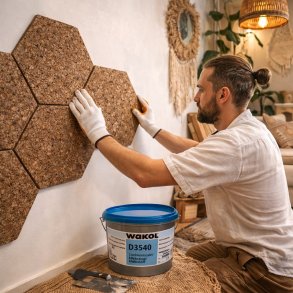
Cork contact adhesive Wakol D 3540 0,8kg
WakolD3540-0,8
- secure payment!
- cheap shipping!
- express delivery!
- cheap shipping!
- express delivery!
In stock
135,39 USD
(excl. VAT)Polystyrene remains a popular insulation material thanks to its affordability and widespread availability. However, price is only one factor to consider when choosing the right insulation for a building. If your goals include reducing heat transfer, creating a quieter indoor environment, and using fewer synthetic materials, natural cork offers a compelling alternative. Expanded Cork Insulation is produced entirely from natural cork, and this version goes far beyond the dimensions of a typical thin insulation panel. It comes as a substantial 300 mm-thick cork block, providing the depth needed for projects that call for a much heavier layer of natural insulation. For spaces affected by cold surfaces, unwanted sound, or concerns about synthetic insulation products, expanded cork can be a practical option worth exploring. Read on to learn how this extra-thick cork block performs and where it can be put to use.

Insulation Made From Natural Cork

Year-Round Indoor Comfort

Reduced Heating And Cooling Costs

Made Without Synthetic Adhesives

Thermal And Acoustic Comfort

Built For Decades Of Performance
Expanded cork is a 100% natural insulating material, offered here in a solid block format. The manufacturing process begins with cork granules that are exposed to temperatures above 350°C. As they heat up, the granules increase dramatically in size – a reaction often compared to kernels popping into popcorn. This process creates a highly porous structure made up of millions of microscopic cells filled with air. These tiny pockets of trapped air are a key reason expanded cork works so well as insulation: they help restrict the movement of heat while also absorbing sound and reducing noise.
A thick expanded cork block is designed for projects that call for a substantial depth of insulation rather than a thin layer of cork. It can be useful in areas affected by considerable heat loss, cold structural components, or indoor spaces that become excessively warm during the summer. The material can also help control unwanted noise and reduce echo in a room.
Not sure whether an expanded cork block this thick is the right fit for your application? Contact us and tell us what you plan to insulate, along with the issue you want to address. We can help you determine which solution is best suited to your project.
Many familiar cork products – including laminate flooring underlayment, decorative wall coverings, and traditional cork panels – are made from agglomerated cork. This material is manufactured by bonding cork granules together with an adhesive or other binding agent. It is generally lighter in color and has a smoother, more consistent surface, making it well suited for finishing floors and walls. However, its primary purpose is not to provide a heavy-duty layer of thermal insulation.
Expanded cork goes through a different production process, which gives it a noticeably different appearance and structure. It is dark in color, frequently nearly black, and features an open, visibly porous texture. It also provides stronger insulating performance than conventional agglomerated cork. This particular product comes as a thick block, making it a practical option for applications where significant insulation depth is required instead of a thin decorative cork finish.
Yes. Place the expanded cork in the room where it will be installed for about 72 hours before beginning the installation. Because cork is a natural material, this period allows it to adjust to the temperature and humidity conditions of its new surroundings. Installing the block immediately after delivery may result in minor expansion or contraction afterward. Giving the material time to acclimate first helps keep these dimensional changes to a minimum.
Yes. For the best finish, we recommend using a paint formulated specifically for cork. Depending on the application and desired appearance, a high-quality interior wall paint may also work well.
Keep in mind that expanded cork naturally has an open, textured, and porous surface. Painting it will not completely conceal this distinctive structure. Even with careful application, the finished surface may retain visible texture rather than appearing perfectly smooth or completely uniform.
Does your home still feel chilly even when the heat is running regularly? Cold wall surfaces and heat escaping too quickly can make living spaces less comfortable while pushing energy use higher. A substantial 300 mm expanded cork insulation block provides an extra-thick layer of natural thermal protection. It is a practical option for projects that call for significant insulation thickness and for homeowners looking to improve indoor comfort without depending on conventional synthetic insulation materials.

Expanded cork helps reduce the rate at which heat travels through walls and other parts of the building envelope. This makes it easier to create a more comfortable indoor environment and keep temperatures more consistent. During colder months, the insulation helps retain warmth inside the home. When outdoor temperatures rise, it can also slow the rate at which interior spaces heat up. As a result, the amount of energy required for heating and cooling may be reduced throughout the year.
Durability adds another important benefit. Expanded cork can maintain its insulating performance for decades, with a service life that often reaches approximately 50 years. At 300 mm thick, the block creates a substantial insulation layer designed to remain effective over the long term, without the need for frequent replacement or ongoing repairs.
What sets expanded cork apart from many common insulation products is its natural composition. The material is 100% natural, and the blocks are made from cork granules without added synthetic glues or artificial resins. Under normal use, expanded cork does not release harmful substances or create dust. This makes it an appealing choice for living spaces where indoor environmental quality matters, including homes with children or people who suffer from allergies.
Thermal performance is only one factor worth considering when selecting insulation. Once installed, these materials can remain inside a building for decades, which means what the insulation is made from matters as well. For homeowners who want to reduce the amount of synthetic material used in their living environment, natural cork blocks provide a distinctly different option from conventional insulation products.
Cork is a renewable natural resource with meaningful environmental benefits. It is harvested from the outer bark of cork oak trees without cutting the trees down. After harvesting, the bark naturally regenerates. During this regrowth period, cork oaks absorb increased amounts of carbon dioxide, helping contribute to the relatively low carbon footprint associated with cork production.
This gives cork a very different material profile from insulation such as polystyrene and mineral wool, which depend on energy-intensive industrial manufacturing processes. Expanded cork begins with a renewable, naturally sourced raw material and requires no synthetic binders to form durable insulation blocks. Its environmental advantages are therefore rooted in the material itself and how it is produced, rather than simply relying on an “eco-friendly” marketing claim.
| Format | Block |
| Color | Dark brown |
| Length | 1000 mm |
| Width | 500 mm |
| Thickness | 300 mm |
| Material | Expanded cork |
| Installation | Glue |
D3540-0,8
In stock
135,39 USD
(excl. VAT)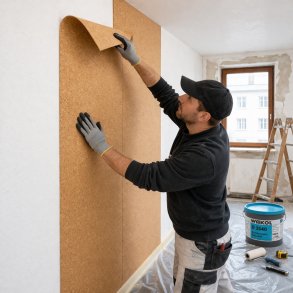
D3540-2,5
In stock
152,64 USD
(excl. VAT)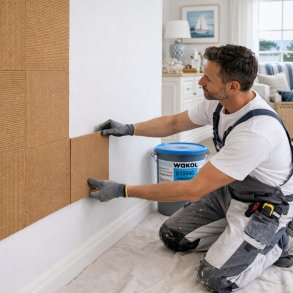
D3540-5,0
In stock
178,99 USD
(excl. VAT)
041004005
- secure payment!
- cheap shipping!
- express delivery!
In stock
149,00 USD
(excl. VAT)
3083
In stock
128,51 USD
(excl. VAT)
ZPM
Delivery time: 1 week
144,83 USD
(excl. VAT)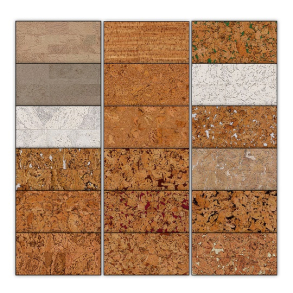
ZPD
Delivery time: 1 week
158,62 USD
(excl. VAT)Customers who bought this product also bought
D3540-2,5
In stock
152,64 USD
(excl. VAT)
KE-100MD
In stock
192,53 USD
(excl. VAT)
3083
In stock
128,51 USD
(excl. VAT)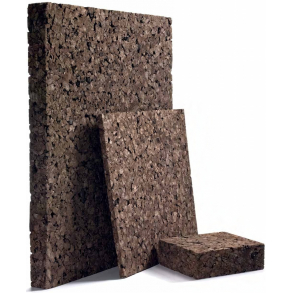
KE-20-HD
In stock
139,16 USD
(excl. VAT) Secure payments
 cheapest delivery
 Highest quality
 Satisfaction Guarantee