




Sample set of best-selling cork products - "Basic" - about 30 pcs.
Cork MinistryZPM
- secure payment!
- cheap shipping!
- express delivery!
- cheap shipping!
- express delivery!
Delivery time: 1 week
144,83 USD
(excl. VAT)Choosing the right filler for shoemaking or leather projects often comes down to how the material performs in your hands. Does it spread smoothly? Can you shape it with precision? What happens after it dries? Instead of purchasing a full-size container without knowing what to expect, start with a 50 ml sample of Cork Filler. This convenient trial size gives you an opportunity to explore the paste's texture, practice applying it, and evaluate the finished results on a small test piece before investing in a larger quantity.

Convenient 50 ml Trial Size

Explore the Paste's Texture

Made for Shoe and Leather Projects

Practice Applying and Shaping

Evaluate the Dried Finish

Test Before Ordering More
A small test can tell you a lot about how a material will work for your project. With the 50 ml Cork Filler sample, you can experiment with the paste before committing to a larger container. Apply a small amount to your test surface, see how easily it spreads, and try forming it into the shape you need. Once the material has dried completely, examine its firmness and ability to maintain its shape. It's a straightforward way to determine whether this cork-based filler fits your techniques and project requirements.
Cork Filler is a ready-to-apply filling compound made with natural cork granules and a binding agent. In shoemaking and footwear restoration, it is commonly used to fill and shape the space between the insole and outsole. The material also has applications in decorative leatherworking. When placed on the back of embossed leather, the paste fills recessed areas behind raised designs, providing support that helps preserve their three-dimensional appearance.
Absolutely. The product inside is exactly the same. The 50 ml sample contains the identical Cork Filler formulation supplied in larger containers. You'll experience the same consistency, application characteristics, and properties after drying. The only differences are the amount of material and its packaging. This smaller option simply makes it easier to try the product before purchasing additional supplies.
Whether you're building a pair of shoes, restoring worn footwear, or adding dimension to embossed leather, the filler you choose can influence the final appearance and feel of your work. Testing an unfamiliar material before applying it to an important project is a practical approach. A 50 ml Cork Filler sample lets you explore the application process on a small scale, observe how the paste responds to shaping, and assess the finished material after it has fully dried.

Working with cork filling paste for the first time? Considering a new material for your shoemaking or leathercraft projects? There's no need to begin with a large container. The 50 ml sample gives you enough material for a hands-on trial, allowing you to explore its characteristics and see how it fits into your workflow.
Start by applying a small portion of the paste to a suitable test piece. Spread it evenly, shape the filling, and smooth the surface as needed. Allow the material to dry completely before checking its firmness and how well it retains the shape you created. You'll also get a better sense of the paste's consistency and how comfortable it is to work with using your preferred tools and techniques. These simple experiments can help you make a more informed decision about purchasing a larger amount.
Made from natural cork particles combined with a binder, Cork Filler comes ready to use. In traditional shoemaking and shoe repair, the paste is applied between the insole and outsole to fill empty spaces and create the desired contour. Its cork-based composition provides a lightweight filling material for this part of the shoe construction.
Cork Filler can also be useful for leather embossing projects featuring raised patterns, decorative details, and dimensional designs. By applying the paste to the reverse side of embossed leather, you can fill the spaces underneath raised elements and help those details maintain their sculpted form. After the filler has dried thoroughly, it can be sanded to refine the surface and achieve the desired finish.
ZPM
Delivery time: 1 week
144,83 USD
(excl. VAT)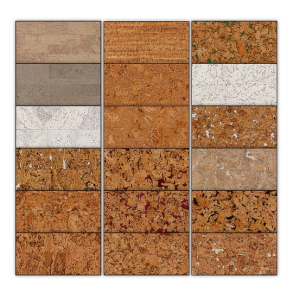
ZPD
Delivery time: 1 week
158,62 USD
(excl. VAT)
SMP-JR-0050-WA-1
In stock
124,69 USD
(excl. VAT)
SMP-JR-0050-CD-1
In stock
124,24 USD
(excl. VAT) Secure payments
 cheapest delivery
 Highest quality
 Satisfaction Guarantee