



Cork contact adhesive Wakol D 3540 0,8kg
WakolD3540-0,8
- secure payment!
- cheap shipping!
- express delivery!
- cheap shipping!
- express delivery!
In stock
135,39 USD
(excl. VAT)Polystyrene is a familiar insulation material, largely because its affordability has made it a popular option for budget-conscious projects. If keeping upfront expenses as low as possible is your main concern, it can certainly get the job done. But insulation is about more than initial cost alone. If you’re looking for a natural material that delivers reliable insulating performance while supporting a more comfortable living environment, consider Expanded Cork Insulation. Made from a completely natural material, expanded cork offers an effective alternative for homeowners who expect more from their insulation. Could it be the right solution for your home or property? Explore the key benefits below.

Insulation Made from 100% Natural Material

Comfortable Living in Every Season

Lower Household Energy Costs

No Chemical Additives

More Warmth with Less Outside Noise

Reliable Performance for Years to Come
Expanded cork is a 100% natural insulation material manufactured in the form of rigid boards. An easy way to understand how it is made is to think about popcorn. Cork granules are heated to extremely high temperatures (above 350°C), causing them to expand and grow in volume – much like kernels popping when exposed to heat. This process creates the characteristic structure of expanded cork, consisting of millions of microscopic cells that trap air inside. These tiny air pockets are a key reason the material performs so well as insulation. In simple terms, expanded cork acts somewhat like a natural thermos – slowing the movement of heat while also helping control sound.
High temperatures also release suberin, a naturally occurring resin found within cork. Suberin acts as the material's own binding agent, allowing the expanded granules to join together and form a solid block. As a result, the manufacturing process does not require synthetic glues or chemical additives to hold the granules together. They bond naturally, leaving the finished insulation 100% natural.
The result is a lightweight yet sturdy cork insulation board with low thermal conductivity (λ approximately 0.036–0.040 W/mK). Its cellular structure can also absorb sound waves, helping reduce unwanted noise. Depending on the construction assembly used for a particular project, sound reduction can reach several dozen decibels.
Expanded cork can help address a range of common comfort and insulation issues around the home. It may be worth considering when walls constantly feel cold, indoor spaces become uncomfortably hot during summer, or noise and echo make a room less pleasant to use.
Expanded cork may be especially useful if:
There are also situations where expanded cork might not be the best fit:
Still wondering whether expanded cork is right for your project? Contact us. Tell us what type of wall or room you are working with, or describe the problem you want to solve. We'll help you determine which solution best matches your needs.
Many familiar cork products – including laminate underlayment, cork panels, and wall coverings – are manufactured from agglomerated cork. This material consists of cork granules held together with a binder or adhesive, and it is what we mean here by “standard” cork. It is generally lighter in color, has a smoother and more uniform appearance, and works well for many wall and flooring applications. However, it is not primarily designed for more demanding insulation projects.
Expanded cork has a noticeably different appearance and structure. It is dark, often nearly black, with a more open and porous texture. It also provides stronger insulating properties than conventional cork, making it a better match for projects where higher insulation performance is important.
If you're mainly looking for a decorative finish or need only a thin layer of cork, traditional agglomerated cork will usually make more sense. If your priority is effective thermal and acoustic insulation made from a 100% natural material, expanded cork is the option we recommend.
They are exceptionally durable. Expanded cork has a stable structure designed to maintain its performance over the long term. Cork naturally contains suberin, which helps protect the material from moisture penetration and microorganisms. This gives cork natural resistance to moisture, mold, insects, and rodents. When properly installed as part of a correctly designed building assembly, it does not provide a food source for them.
Expanded cork boards also maintain their dimensional stability across an unusually wide temperature range – from approximately –180°C to +120°C. The material meets EN 13170 and EN 13172 requirements and carries the French A+ emissions classification, indicating very low emissions of volatile substances in indoor environments.
Polystyrene is the more affordable option, and price is its biggest advantage over cork. It is widely used for insulation, but it offers very little when it comes to improving acoustics. In everyday use, the difference in sound reduction may be barely noticeable.
Expanded cork requires a larger upfront investment, but it delivers benefits beyond thermal insulation. This natural material can help limit heat loss while also making a noticeable improvement in room acoustics. Unlike polystyrene, expanded cork is manufactured entirely from a natural raw material.
Here's a closer look at how the two materials differ:
Yes. Before installation, leave the cork in the room where it will be installed for approximately 72 hours. This allows the material to adjust to the temperature and humidity of the space. Because cork is a natural material, installing the boards immediately after delivery can lead to small dimensional changes later, including slight expansion or contraction. Allowing the material to acclimate beforehand helps minimize that possibility.
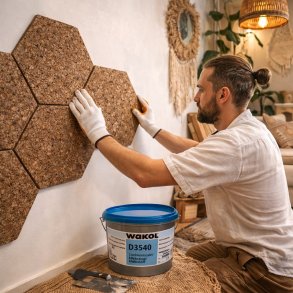
For installation, we recommend Wakol D-3540 cork contact adhesive. It's the adhesive we use for our own cork installations, and we've found it to provide reliable, long-lasting results.
As a general guideline, plan on using approximately 100 g of adhesive per board. That means:
Provided the wall is dry, clean, and level, the adhesive creates a durable bond designed to last.
Standard expanded cork boards are primarily intended for indoor applications. If your project involves installing cork on an exterior facade, Facade Expanded Cork is the more appropriate product for that application.
Yes. Expanded cork is lightweight, easy to cut, and works well in terrariums designed to create a natural-looking environment. If you're looking for cork products specifically intended for terrarium setups, take a look at our dedicated selection of branches, tubes, and other decorative elements made from natural cork. These products are particularly useful because they can create natural hiding areas while also providing surfaces for climbing.
Yes. For the best results, we generally recommend using paint specifically designed or suitable for cork surfaces.
Keep in mind that expanded cork naturally has a porous, textured, and uneven surface. Because of that structure, achieving a perfectly smooth and completely uniform painted finish may require more effort than it would on a conventional flat wall.
Do the walls in your home stay cold to the touch even while the heat is running? Or do some rooms never seem to reach the comfortable temperature you're looking for? Over time, you may end up using more energy and paying higher heating bills without getting the indoor comfort you expect. That's one reason more homeowners are choosing expanded cork as a natural way to address heat loss, cold surfaces, and related comfort issues.

A well-insulated space is easier to keep comfortable in every season, and cork provides effective thermal protection throughout the year. It helps maintain a pleasant indoor temperature while reducing major temperature fluctuations. When it is cold outside, cork helps slow heat loss from the building. During hot weather, it helps prevent interior spaces from warming up as quickly. As a result, your heating and cooling systems may require less energy to maintain comfortable conditions indoors.
The benefits are designed to last, too. Expanded cork boards can retain their thermal insulation performance for decades, with a service life of around 50 years in many applications. Once properly installed, the insulation can remain effective for years without frequent replacement, repeated maintenance, or ongoing repairs.
Expanded cork stands apart from many conventional insulation products because it is made entirely from natural cork. Cork granules are used to create the boards without relying on synthetic glues or artificial resins. The material does not release harmful substances or generate dust, making it an appealing choice for homeowners who care about indoor environmental quality, especially in households with children or people who are sensitive to allergens.
Material composition matters when you consider how much time we spend inside our homes and other buildings. Performance and appearance are important, but it is equally worthwhile to understand what the products surrounding you are actually made from. Synthetic materials and plastics are already part of countless everyday products, so choosing a natural building material can help reduce the amount of synthetic content used throughout an interior.
For those looking for a more environmentally conscious insulation option, cork offers meaningful advantages rooted in the material itself. While the term “eco-friendly” is widely used in product marketing, cork has a clear environmental story. It is harvested from the bark of cork oak trees without cutting the trees down. After harvesting, the bark naturally regenerates, and during this regrowth period the tree absorbs increased amounts of carbon dioxide. This process helps keep the carbon footprint associated with cork production remarkably low.
In contrast, conventional insulation products such as polystyrene and mineral wool generally have a less favorable environmental profile. Producing these materials relies on energy-intensive industrial processes that can place greater demands on natural resources and the environment. Cork comes from a renewable source and is naturally derived, making its environmental advantages an inherent part of the material rather than simply a claim on a product label.
| Format | Board |
| Color | Dark brown |
| Length | 1000 mm |
| Width | 500 mm |
| Thickness | 30 mm |
| Material | Expanded cork |
| Installation | Glue |
D3540-0,8
In stock
135,39 USD
(excl. VAT)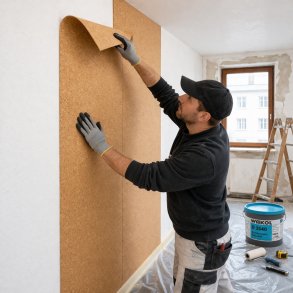
D3540-2,5
In stock
152,64 USD
(excl. VAT)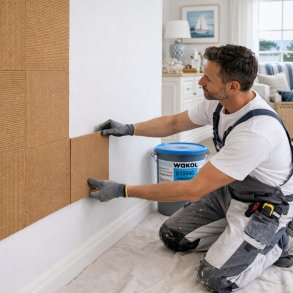
D3540-5,0
In stock
178,99 USD
(excl. VAT)
041004005
- secure payment!
- cheap shipping!
- express delivery!
In stock
149,00 USD
(excl. VAT)
3083
In stock
128,51 USD
(excl. VAT)
ZPM
Delivery time: 1 week
144,83 USD
(excl. VAT)
ZPD
Delivery time: 1 week
158,62 USD
(excl. VAT)Customers who bought this product also bought
PK5K100
In stock
122,22 USD
(excl. VAT)
RK1050SM
In stock
178,95 USD
(excl. VAT)
TKS10-30
In stock
134,30 USD
(excl. VAT)
PGK-6MM(1)
In stock
190,28 USD
(excl. VAT) Secure payments
 cheapest delivery
 Highest quality
 Satisfaction Guarantee