



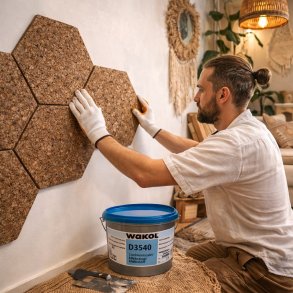
Cork contact adhesive Wakol D 3540 0,8kg
WakolD3540-0,8
- secure payment!
- cheap shipping!
- express delivery!
- cheap shipping!
- express delivery!
In stock
135,39 USD
(excl. VAT)Why settle for an ordinary flat wall when your building could have a surface with real depth and personality? Wave S1 Expanded Cork Facade Panels bring a distinctive architectural look to exterior walls and interior spaces alike. Their closely arranged vertical ridges gently shift between wider and narrower sections, creating a continuous three-dimensional wave effect. The result is a textured wall finish that adds visual interest without relying on artificial patterns or finishes. Every panel is crafted from natural expanded cork.

Detailed Wave Texture

Natural Thermal Insulation
Made From 100% Cork

Comfort Through Every Season

Built for Long-Term Performance

Exterior and Interior Applications
Expanded cork offers much more than an eye-catching architectural finish. This naturally derived material combines practical performance characteristics with a distinctive appearance, making it worth considering for both exterior wall cladding and indoor design projects.
Choosing the right adhesive is an important part of installation. The appropriate product depends on whether the panels will be installed on an exterior facade or an interior wall:
Before applying adhesive, confirm that the installation surface is flat, clean, dry, and structurally stable. The cork panels should also remain in the installation environment for at least 72 hours to acclimate before mounting. As you position each panel, check how the narrow wave details line up along adjoining edges. Careful alignment helps create a more continuous, visually balanced finish. Not sure which adhesive is appropriate for your project? Contact us, and we'll help you identify a suitable option.
For accurate cuts, a fine-tooth precision wood saw is a practical choice. Other suitable cutting tools equipped with toothed blades can also be used to adjust the panels to the dimensions required for your installation.
The manufacturing process takes advantage of a fascinating natural reaction. Think of popcorn kernels expanding when exposed to heat. Small cork granules undergo treatment with high-temperature steam, causing them to expand while gradually developing a darker color. As this happens, the granules join together to form solid blocks of expanded cork. These blocks can then be processed into a variety of finished products.
One of the most interesting aspects is that the cork particles bond without synthetic glue. Heat activates substances already present in the natural cork, allowing the granules to adhere to one another. The resulting material can be shaped into decorative wall and facade panels, including the finely sculpted Wave S1 design.
Wave S1 panels have an approximate density of 140 kg/m³, with a specified tolerance of ±10 kg/m³.
Wave S1 expanded cork cladding has a thermal conductivity of λ = 0.043 W/(m·K). This value describes the rate at which heat moves through the material. By slowing heat transfer, expanded cork can help keep indoor warmth from escaping during winter and reduce unwanted heat gain during summer.
Keep in mind that the thermal performance of a completed wall depends on the entire assembly. The insulation properties of the finished construction are influenced by the other materials, layers, and components used alongside the cork panels.
Each Wave S1 panel measures 1000 × 500 mm and provides 0.5 m² of wall coverage. As an example, covering a 4 m² area requires 8 panels. When calculating the quantity for your project, allow some additional material for trimming and offcuts. Extra material is especially useful when working around windows, door openings, corners, and other architectural features that require custom cuts.
Each panel has a thickness of 40 mm.
No. Expanded cork is not a fireproof or noncombustible material. Wave S1 panels carry a Euroclass E reaction-to-fire classification, indicating that the material is combustible. However, cork reacts to high temperatures differently from certain synthetic products. Rather than melting and dripping, its exposed surface generally chars. This charred layer can help slow further heat penetration into the material.
Panel joints may remain slightly visible even with careful installation. Because cork is a natural material, changes in temperature and humidity can cause minor dimensional movement. Allowing sufficient acclimation time and aligning the panels accurately during installation can help achieve a cleaner, more uniform appearance.
Yes. Acclimation is an essential preparation step. Place the Wave S1 panels in the environment where they will be installed for at least 72 hours before beginning work. This gives the natural cork time to adjust to the surrounding temperature and humidity conditions.
The exterior of a building does more than define its appearance. It establishes the architectural character of the entire property and influences how the structure connects with its surroundings. Choosing the right exterior cladding therefore involves much more than selecting an appealing color. Surface texture, material composition, and visual balance all contribute to the finished result. While many siding products are designed to replicate the appearance of wood or natural stone, cork offers something entirely different: an authentic texture that needs no imitation. Wave S1 expanded cork siding brings this natural character to exterior walls through an intricately shaped surface of closely spaced waves. The fine, flowing relief adds subtle dimension and creates a distinctive architectural finish without relying on artificial patterns or manufactured-looking effects.

Creating a memorable building exterior doesn't always require oversized architectural details or dramatic decorative elements. Sometimes, the most compelling designs are built around small features that work together to produce a cohesive look. Wave S1 uses a carefully arranged surface pattern to bring texture, movement, and visual depth to exterior cladding. Narrow vertical waves extend across the panels, gradually shifting between slightly wider and slimmer shapes. Their repeated arrangement creates a dense, balanced relief with an almost fabric-like appearance. Viewed from a distance, the surface looks refined and uniform. Up close, the individual curves and naturally varied texture of the cork become more noticeable.
Another distinctive feature of this design is the way it responds to changing daylight. As the sun moves across the sky, the surface reveals different highlights and shadows. Raised portions of the wave pattern catch the light, while the narrow recessed areas create gentle shading. This interaction adds dimension without making the exterior look overly busy. Unlike cladding with deep grooves or large sculptural profiles, Wave S1 maintains a delicate, consistent visual rhythm. It is an appealing option for homeowners, designers, and architects who want to introduce architectural interest while preserving a clean, understated exterior aesthetic.
A visually appealing exterior is only one part of a well-considered building design. The materials used on outside walls can also influence everyday comfort. Expanded cork offers a combination of characteristics that make it worth considering for exterior applications. Its natural thermal and sound-insulating properties provide benefits that go beyond the decorative surface. Cork helps slow the transfer of heat through exterior walls, which can contribute to reduced heat loss during colder months and limit unwanted heat gain when outdoor temperatures rise. The material also has sound-insulating qualities that may help reduce noise entering from the surrounding environment. This can be particularly valuable for homes near busy roads, active neighborhoods, or other areas where outdoor noise is part of daily life.
Exterior building materials must also be able to handle changing environmental conditions. Rain, direct sunlight, freezing temperatures, and seasonal temperature fluctuations all place demands on a building's outer surfaces. Expanded cork combines a relatively low weight with dimensional stability and vapor-permeable properties. These characteristics make it a suitable material for exterior wall cladding applications. As with any building envelope system, overall performance depends on proper installation, appropriate detailing, and compatibility with the other construction materials being used. Wave S1 therefore offers more than a distinctive exterior finish: it combines architectural texture with practical material qualities that can support a thoughtfully designed building exterior.
Behind every building material is a story about where it comes from and how it is produced. Yet those details are often overlooked when attention is focused primarily on the finished appearance. Many modern cladding products are engineered to resemble wood, stone, or other naturally occurring surfaces. Cork takes a different approach because its appearance and physical characteristics originate directly in nature. Its warm color, distinctive texture, and unique properties come from the outer bark of the cork oak tree. In Portugal, harvesting this bark is part of a long-established tradition passed down through generations. Skilled workers carefully remove the outer bark by hand without cutting down the tree. Once the harvest is complete, the cork oak remains standing and continues to grow.
What makes cork especially remarkable is the tree's ability to renew the very material that has been harvested. After the bark is removed, the cork oak naturally develops a new protective layer. Approximately nine to twelve years later, that layer can be harvested again. This allows a single tree to provide cork multiple times throughout its life without being cut down. The harvesting process requires specialized knowledge, patience, and careful workmanship, but it makes repeated use of this natural resource possible. From a protective layer growing on a living tree to an architectural exterior finish with finely sculpted waves, Wave S1 illustrates how a naturally occurring material can be transformed into a distinctive element of modern building design.
| Model | Wave S1 |
| Format | Board |
| Color | Dark brown |
| Length | 1000 mm |
| Width | 500 mm |
| Thickness | 40 mm |
| Material | Expanded cork |
| Installation | Glue |
| Possibility of return | no return possible (custom made product) |
| Title | Type | Size | Download |
|---|---|---|---|
| Decorative-expanded-3D-facade-wall-natural-cork-insulation-panels.pdf | 4.69MB | Download |
D3540-0,8
In stock
135,39 USD
(excl. VAT)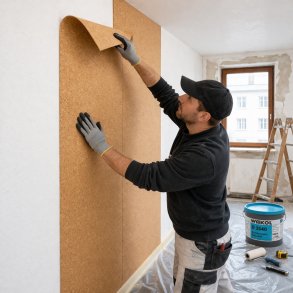
D3540-2,5
In stock
152,64 USD
(excl. VAT)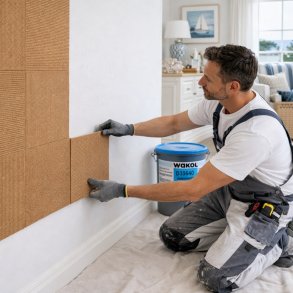
D3540-5,0
In stock
178,99 USD
(excl. VAT)
041004005
- secure payment!
- cheap shipping!
- express delivery!
In stock
149,00 USD
(excl. VAT)
3083
In stock
128,51 USD
(excl. VAT)
ZPM
Delivery time: 1 week
144,83 USD
(excl. VAT)
ZPD
Delivery time: 1 week
158,62 USD
(excl. VAT)Customers who bought this product also bought
PK3DHCWH
In stock
43,51 USD for 3 pcs.
(excl. VAT)
PK3DHCAN
In stock
43,18 USD for 3 pcs.
(excl. VAT)
PK3DCWLM
In stock
47,93 USD for 3 pcs.
(excl. VAT)
KE-50
In stock
146,22 USD
(excl. VAT) Secure payments
 cheapest delivery
 Highest quality
 Satisfaction Guarantee