



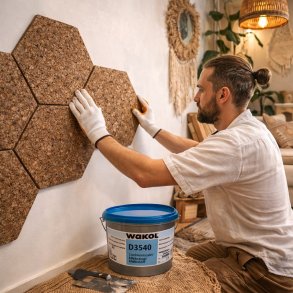
Cork contact adhesive Wakol D 3540 0,8kg
WakolD3540-0,8
- secure payment!
- cheap shipping!
- express delivery!
- cheap shipping!
- express delivery!
In stock
135,39 USD
(excl. VAT)A flat, uniform exterior may create a clean, polished look, but it doesn't always make a lasting impression. For a more distinctive architectural finish, Circles Expanded Cork Facade Panels bring a fresh perspective to wall design. Their eye-catching circular relief adds texture and dimension, transforming an ordinary surface into a visually engaging feature. As sunlight shifts throughout the day, the raised pattern produces soft, changing shadows that give the wall a dynamic appearance. Beyond their decorative appeal, these cork panels offer practical benefits as well. Crafted from 100% natural expanded cork, they provide thermal insulation while combining contemporary aesthetics with long-term functionality. Built with durability in mind, they offer a lasting solution for both exterior and interior wall applications.

Eye-Catching Circular Texture

Natural Thermal Insulation

Made from 100% Natural Cork

Designed for Every Season

Engineered for Long-Term Durability

Suitable for Interior and Exterior Walls
Circles panels are worth considering when you're looking for:
Expanded cork brings more to a building than an attractive natural finish. Its combination of practical material properties makes it an interesting option for both exterior facades and interior surfaces.
Circles panels are attached with adhesive. The appropriate product depends on whether the installation is indoors or outdoors:
Start with a properly prepared surface. The substrate should be level, dry, clean, and structurally stable. Before installation, allow the panels to acclimate to the conditions at the installation site for 72 hours. If you're unsure which adhesive is best for your application, contact us. We'll be happy to help you find an appropriate option.
For clean edges and accurate sizing, we suggest using a fine-tooth precision wood saw or another appropriate cutting tool equipped with a toothed blade.
The manufacturing process has something in common with making popcorn. When corn kernels are heated, they expand and take on a different structure. Cork undergoes a similar transformation. Granules of natural cork are exposed to high-temperature steam, causing them to expand, darken, and eventually bond into solid blocks.
One of the most interesting aspects is that the process doesn't depend on synthetic adhesives. Cork contains natural compounds that are released when heated and act as a binding agent. These compounds hold the expanded granules together without the need for artificial glue.
Circles panels have a nominal density of approximately 140 kg/m³, with an allowable variation of ±10 kg/m³.
Circles panels have a thermal conductivity rating of λ = 0.043 W/(m·K). In everyday terms, this means heat moves through the cork relatively slowly. The material helps limit heat escaping through walls in winter while reducing heat transfer from outdoors during hot weather.
Keep in mind that the insulation performance of a finished wall depends on the entire assembly. The structural wall and any additional material layers also influence the overall result.
Each Circles panel measures 1000 × 500 mm and covers 0.5 m². For example, an area of 4 m² requires 8 panels. Ordering a little extra material is a good idea to account for cuts and waste, especially around windows, building corners, and other architectural features.
Every panel is 40 mm thick.
Circles panels carry a Euroclass E reaction-to-fire classification. Expanded cork is combustible and should not be considered a fireproof or noncombustible building material. However, it behaves differently from certain materials that melt when exposed to high temperatures. Cork typically develops a charred surface layer, which may help slow further heat penetration. Understanding this characteristic is important when evaluating cladding materials for your building.
Some panel seams may remain slightly visible, even with careful installation. Because cork is a natural material, changes in temperature and moisture can affect its dimensions. Allowing the panels to acclimate beforehand and positioning them accurately during installation can help reduce unwanted gaps and maintain a consistent geometric design across the wall.
Yes, and it's an important part of proper preparation. Give the panels at least 72 hours to adjust to the temperature and humidity at the installation location. This allows the cork to stabilize under the surrounding conditions before it's permanently attached.
Skipping the waiting period might seem convenient, but it can lead to issues later. If the panels continue adjusting after installation, small gaps may develop between neighboring pieces. A three-day acclimation period helps minimize dimensional changes and makes it easier to achieve neat, even seams.
Wood-look siding, manufactured stone finishes, and smooth exterior panels are familiar choices for residential and commercial buildings. But what if you'd rather showcase a material's natural character instead of copying the appearance of something else? Circles Expanded Cork Facade Panels offer a fresh approach to exterior wall design. Their overlapping circular pattern creates depth and texture, while the natural color and warmth of cork give the building a distinctive personality. No imitation finish required.

There's a place for clean, understated exterior walls. Still, a completely flat surface isn't the only way to create a modern home. Your home's exterior is part of what you see every day, and the right architectural details can make it feel more personal and memorable.
That's where the Circles design stands out. Rounded shapes overlap to form a repeating three-dimensional pattern that adds visual depth to the wall. As sunlight moves throughout the day, the curved surfaces catch highlights and create shifting shadows. The effect is interesting without feeling overly busy – an appealing balance for contemporary architecture that incorporates natural materials.
A great-looking exterior makes an impression, but what happens inside the building matters just as much. Expanded cork offers natural thermal insulation that can help reduce heat loss through exterior walls in colder weather and limit incoming heat during the summer. Its sound-insulating properties may also help create a quieter interior by reducing noise transmitted from outdoors.
Exterior cladding also needs to handle changing weather conditions. Rain, freezing temperatures, strong sunlight, and seasonal temperature swings can all put materials to the test. Expanded cork is well suited to these challenges. It's lightweight, dimensionally stable, and vapor-permeable. So while the Circles pattern adds architectural interest, the material itself delivers a useful combination of functional qualities.
Some exterior finishes rely on printed wood grain or manufactured stone textures to achieve a natural appearance. Cork doesn't need to imitate anything. Its color, texture, and visual character come directly from the material. The story starts in Portugal, where harvesting cork has been a traditional craft for generations. Skilled workers carefully remove bark from cork oak trees by hand, leaving the trees standing and growing.
What makes this process remarkable is that the bark naturally grows back. After several years, the same tree can be harvested again. It's a method built around experience, careful handling, and patience rather than cutting trees down.
| Model | Circles M1 |
| Format | Board |
| Color | Dark brown |
| Length | 1000 mm |
| Width | 500 mm |
| Thickness | 40 mm |
| Material | Expanded cork |
| Installation | Glue |
| Possibility of return | no return possible (custom made product) |
| Title | Type | Size | Download |
|---|---|---|---|
| Decorative-expanded-3D-facade-wall-natural-cork-insulation-panels-4.pdf | 4.69MB | Download |
D3540-0,8
In stock
135,39 USD
(excl. VAT)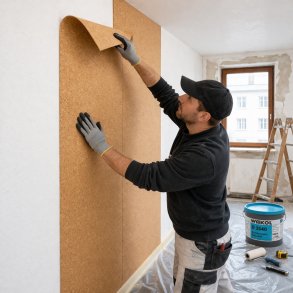
D3540-2,5
In stock
152,64 USD
(excl. VAT)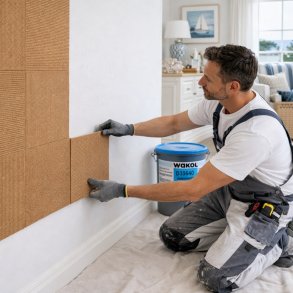
D3540-5,0
In stock
178,99 USD
(excl. VAT)
041004005
- secure payment!
- cheap shipping!
- express delivery!
In stock
149,00 USD
(excl. VAT)
3083
In stock
128,51 USD
(excl. VAT)
ZPM
Delivery time: 1 week
144,83 USD
(excl. VAT)
ZPD
Delivery time: 1 week
158,62 USD
(excl. VAT)Customers who bought this product also bought
D3540-2,5
In stock
152,64 USD
(excl. VAT)
KE-40CL1
Not in stock
167,21 USD
(excl. VAT)
KE-50GM1
In stock
180,02 USD
(excl. VAT)
KE-50WL1
In stock
159,47 USD
(excl. VAT) Secure payments
 cheapest delivery
 Highest quality
 Satisfaction Guarantee